



Laser Cladding Rotary Tiller Blades for Extended Wear Life
A laser cladding rotary tiller blade is an upgraded agricultural cutting tool designed for high-load, long-duration field operations. By applying laser cladding technology to the blade surface, a high-performance alloy layer is metallurgically bonded to critical wear zones, significantly improving wear resistance, corrosion resistance, and overall service life.
At FNS Pipeline Technology Co., Ltd., laser cladding solutions originally developed for demanding industrial components are now successfully applied to agricultural machinery, helping manufacturers and end users reduce downtime and operating costs.
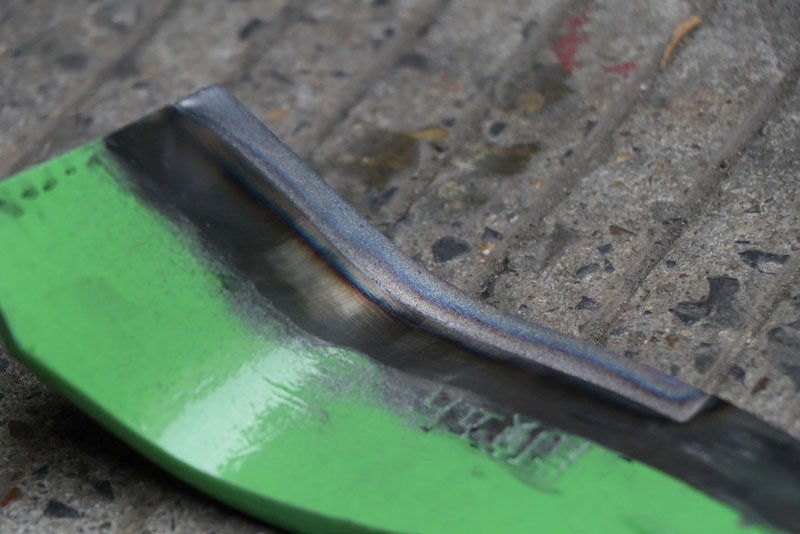
Laser cladding process on rotary tiller blade surface
Working Conditions of Rotary Tiller Blades
Rotary tiller blades operate under extremely harsh conditions. During field work, they are exposed to continuous contact with hard soil, sand, and gravel, leading to severe abrasive wear. In addition, wet environments and acidic or alkaline soils accelerate corrosion. High-speed rotation also subjects the blade to repeated impact loads.
These conditions require the blade surface to maintain:
- High hardness and excellent wear resistance
- Adequate toughness and crack resistance
- Stable performance in corrosive environments
Traditional carbon steel blades often struggle to meet these combined requirements over long service periods.
Principle of Laser Cladding Technology
Laser cladding is a high-energy surface modification process in which metal alloy powder is rapidly melted by a focused laser beam and deposited onto the substrate surface, forming a dense coating with strong metallurgical bonding.
Key characteristics of laser cladding include:
- High energy density with localized heat input
- Minimal distortion of the base material
- Metallurgical bonding between coating and substrate
- Capability to produce gradient and multi-layer composite structures
These features make laser cladding ideal for reinforcing precision components such as rotary tiller blades.
Cladding Material Selection
Based on field conditions and cost-performance requirements, commonly used laser cladding powders include:
- Nickel-based alloys (e.g., Ni60): Excellent metallurgical bonding, good wear and corrosion resistance
- WC-reinforced alloy powders: Extremely high hardness for enhanced abrasive resistance
- Iron-based alloy powders: Cost-effective solutions for large-scale agricultural applications
FNS works closely with customers to select and optimize powder compositions for specific soil and operating environments.
Typical Cladding Areas on Rotary Tiller Blades
According to wear patterns observed in real field operations, laser cladding is typically applied to:
- The leading edge of the blade, which experiences the most severe wear
- The blade tip and adjacent upper and lower zones
- Localized high-stress areas requiring additional reinforcement
Targeted cladding ensures maximum performance improvement with optimized material usage.
Process Parameters for Laser Cladding
Key process parameters are carefully controlled to achieve stable quality and crack-free coatings:
- Laser power: typically 1–3 kW
- Scanning speed: 3–10 mm/s
- Cladding layer thickness: 0.5–2 mm
- Controlled preheating and cooling to reduce residual stress
These parameters are adjusted based on blade geometry and material characteristics.
Performance Advantages of Laser-Clad Rotary Tiller Blades
Compared with conventional rotary tiller blades with a hardness of approximately 30–40 HRC, laser-clad blades can achieve surface hardness levels of 55–65 HRC. The metallurgical bond ensures high coating adhesion and durability.
Field and laboratory evaluations show:
- Wear life extended by 3–5 times compared to standard blades
- Significantly improved corrosion resistance in wet and saline soils
- After 200 hours of operation, laser-clad Ni60 blades exhibit only about 35% of the wear depth observed on untreated 45 steel blades
Advanced gradient cladding structures—featuring a tough inner layer and a hard outer layer—further enhance crack resistance while maintaining excellent wear performance.
Application Scenarios
Laser cladding rotary tiller blades are particularly suitable for:
- Paddy fields and muddy terrain
- Sandy or gravel-rich soils
- High-intensity agricultural tillage operations
A Durable Upgrade for Modern Agricultural Equipment
Laser cladding rotary tiller blades represent a performance upgrade over traditional agricultural cutting tools. For equipment manufacturers and professional farming operators seeking higher efficiency and lower maintenance costs, this technology offers a reliable and sustainable solution.
With proven expertise in laser cladding equipment and process development, FNS Pipeline Technology Co., Ltd. provides customized surface engineering solutions for both industrial and agricultural applications. For more information about laser cladding systems and tailored solutions, please contact our technical team.


