


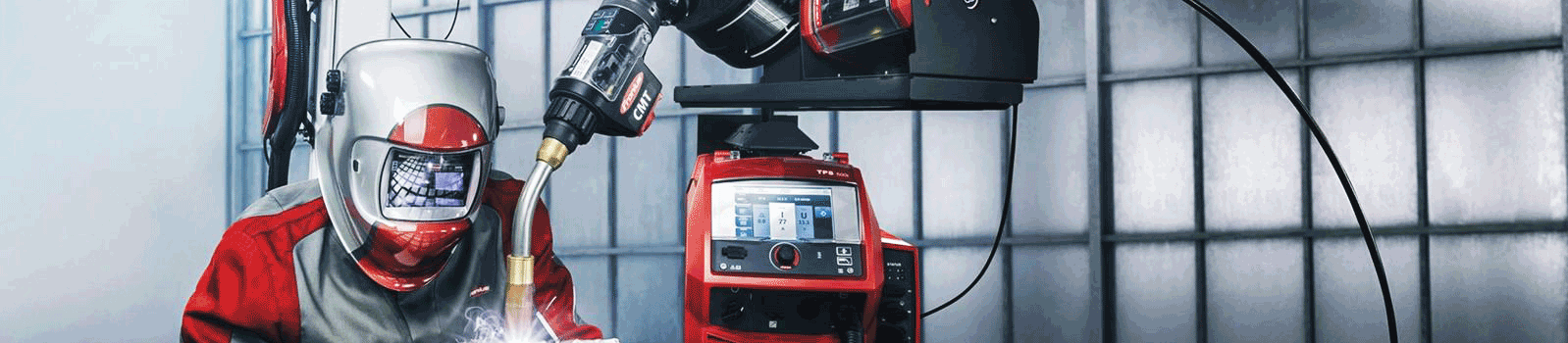
Plasma Cladding Remanufacturing for Industrial Equipment: Extending Service Life of High-Value Components
In industries such as mining, chemical processing, metallurgy, power generation, and cement production, large mechanical components are constantly exposed to harsh operating environments. Over time, critical parts such as turbine rotor journals, blades, rolling mill shafts, and structural frames experience wear, corrosion, cracking, and localized damage.
To address these challenges, plasma cladding remanufacturing for industrial equipment has emerged as a highly effective solution. By applying plasma cladding remanufacturing for industrial equipment, damaged surfaces can be restored and reinforced with high-performance alloy coatings, significantly extending component lifespan and reducing replacement costs.
This advanced surface engineering method is particularly valuable for high-cost components such as turbine blades, where replacement is expensive and downtime is critical.
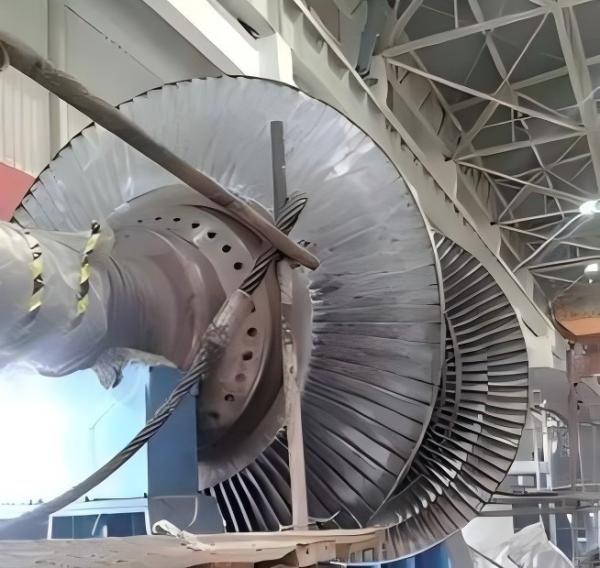
Plasma powder welding for power plant rotor cylinder repair
Common Failure Modes of Industrial Components
Large industrial components often operate under extreme conditions, including:
- High temperature and high-pressure gas environments
- Continuous exposure to corrosive media
- Heavy mechanical loads and cyclic stress
- Friction and abrasion during operation
As a result, typical failure modes include:
- Surface wear and material loss
- Corrosion-induced degradation
- Cracking or fracture initiation at the surface
- Localized spalling or peeling
In many cases, damage originates from the surface or near-surface regions. This makes plasma cladding remanufacturing for industrial equipment repair an ideal solution to restore and enhance performance.
Applications in Turbine and Power Generation Equipment
For gas turbines and steam turbines, failures commonly occur in hot-end components, including:
- Turbine rotors
- Blades
- Nozzles
Certain types of damage, such as fractures at the blade root, may be irreparable. However, damage on blade tips or surface regions can be effectively restored using plasma cladding remanufacturing for industrial equipment applications.
Considering the high cost of turbine blades, repairing and reusing these components can significantly reduce operational costs for power plants.
Traditional Repair Methods vs Plasma Cladding
Conventional surface treatment methods include:
- Surface hardening
- Carburizing or nitriding
- Thermal spraying
While these methods provide some level of surface enhancement, they often have limitations in bonding strength, coating thickness control, and long-term durability.
In contrast, plasma cladding remanufacturing for industrial equipment offers several advantages:
Strong Metallurgical Bond
The coating forms a metallurgical bond with the base material, ensuring long-lasting adhesion.
Fine Microstructure
Rapid heating and cooling create a refined microstructure, improving hardness and wear resistance.
Low Dilution Rate
The process allows precise control of heat input and coating composition.
Flexible for Complex Geometry
With multi-axis CNC systems or 6+2 robotic manipulators, complex 3D components can be repaired efficiently.
Plasma Cladding Process for Large Components
The plasma cladding remanufacturing for industrial equipment process involves the following steps:
Surface Inspection and Preparation
Damaged areas are identified and cleaned to remove contaminants and oxidation.
Plasma Powder Deposition
Alloy powder is melted using a high-energy plasma arc and deposited onto the component surface.
Controlled Cooling and Finishing
The cladded surface is cooled and machined to restore dimensional accuracy and surface quality.
This process can also be used for plasma surface hardening, offering an alternative to traditional heat treatment methods.
FNS Project Case: Turbine Shaft Journal Repair
At FNS Pipeline Technology Co., Ltd., plasma cladding technology has been successfully applied in multiple industrial remanufacturing projects.
Project Overview
- Component: Turbine shaft journal
- Industry: Power generation
- Problem: Severe wear and corrosion on shaft surface
- Solution: Plasma alloy powder cladding
Results
- Restored original dimensions and surface integrity
- Improved wear resistance and corrosion protection
- Extended service life by more than 2 times
- Reduced replacement cost by over 60%
This project demonstrates how plasma cladding remanufacturing for industrial equipment can deliver both technical and economic benefits.
Why Choose Plasma Cladding for Industrial Remanufacturing
By adopting plasma cladding remanufacturing for industrial equipment, companies can:
- Extend the service life of high-value components
- Reduce equipment downtime and maintenance costs
- Improve performance under extreme operating conditions
- Enable sustainable and cost-effective remanufacturing
With increasing demand for efficiency and sustainability, plasma cladding has become a key technology in modern industrial maintenance strategies.
FAQ
1. What is plasma cladding remanufacturing for industrial equipment?
Plasma cladding remanufacturing for industrial equipment is a process that uses a plasma arc to deposit wear-resistant alloy coatings onto damaged or worn surfaces, restoring performance and extending service life.
2. Which components can be repaired using plasma cladding?
It is suitable for:
- Turbine blades and rotors
- Shaft journals
- Rolling mill components
- Heavy machinery parts
3. How does plasma cladding compare to thermal spraying?
Plasma cladding forms a metallurgical bond, while thermal spraying typically creates a mechanical bond. This makes plasma cladding more durable and reliable.
4. Is plasma cladding suitable for complex shapes?
Yes. With robotic systems and multi-axis machines, plasma cladding can repair complex 3D components with high precision.
5. Can plasma cladding reduce operational costs?
Yes. It significantly reduces replacement frequency, downtime, and material waste, making it a cost-effective solution.


