



Plasma Hardfacing for Scraper Conveyor Middle Trough: Extending Wear Life in Mining Equipment
In underground coal mining systems, the scraper conveyor plays a critical role in transporting coal from the mining face to the next stage of processing. Among all its components, the middle trough is one of the most severely worn parts due to constant contact with coal, scraper chains, and heavy mechanical loads.
To address this challenge, plasma hardfacing for scraper conveyor middle trough has become a highly effective surface reinforcement solution in recent years. By applying plasma hardfacing for scraper conveyor middle trough, wear-resistant alloy materials can be metallurgically bonded to the base metal surface, significantly improving durability and mechanical strength.
With this technology, plasma hardfacing for scraper conveyor middle trough greatly extends the service life of mining conveyor components while reducing equipment replacement costs and resource waste.
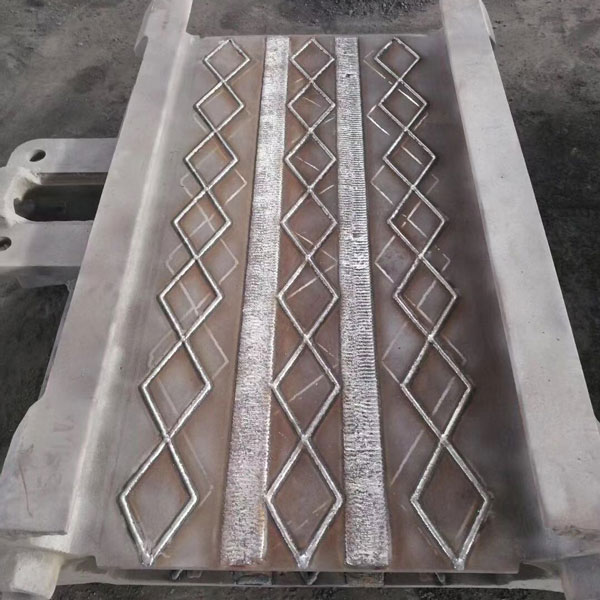
Scraper conveyor middle trough repair using plasma cladding technology
Why the Scraper Conveyor Middle Trough Wears So Quickly
The scraper conveyor middle trough is mainly used in underground coal mining conveyors and transfer machines. It typically consists of a bottom plate and side plates, forming a channel structure.
The upper part of the trough is used to transport coal, while the lower section allows the scraper chain to return during operation.
During continuous operation, the trough experiences severe wear due to:
- Constant friction between coal and the trough surface
- Repeated scraping from scraper chains
- Heavy mechanical impact during coal transport
- Abrasive particles in mining environments
Statistics show that hundreds of thousands of scraper conveyor trough sections fail every year due to wear, causing significant resource waste and production interruptions.
By applying plasma hardfacing for scraper conveyor middle trough repair, mining companies can dramatically improve the wear resistance of this critical component.
Traditional Welding Methods and Their Limitations
Most scraper conveyor middle troughs are manufactured from high-manganese wear-resistant steels, such as NM360 or Mn13. Traditionally, repair welding has been performed using manual arc welding methods.
Common welding materials include:
- D256 welding electrode
- D266 welding electrode
The conventional repair process involves several steps:
- Grinding and cleaning the weld area
- Removing rust, oil, and contaminants
- Preheating and drying welding electrodes
- Multi-layer welding with small diameter electrodes
- Hammering the weld after each layer to prevent cracking
While this method can repair damaged components, it has several disadvantages:
- Complex welding procedures
- High labor intensity
- Low production efficiency
- Inconsistent welding quality
Because the process relies heavily on manual operation, maintaining stable welding quality can be difficult.
Advantages of Plasma Hardfacing Technology
Compared with traditional welding methods, plasma hardfacing for scraper conveyor middle trough offers significant technological advantages.
Strong Metallurgical Bond
The plasma cladding layer forms a metallurgical bond with the base metal, providing superior strength and wear resistance.
Higher Production Efficiency
Automated cladding equipment allows one operator to manage multiple machines simultaneously, greatly improving productivity.
Stable and Consistent Quality
Unlike manual welding, automated plasma hardfacing for scraper conveyor middle trough ensures uniform coating thickness and consistent welding quality.
Reduced Labor Intensity
Automated plasma cladding reduces the physical workload for workers and simplifies the repair process.
Extended Equipment Life
The reinforced surface significantly improves the wear resistance and tensile strength of the middle trough, allowing it to perform reliably under harsh mining conditions.
Plasma Hardfacing Process for Conveyor Troughs
The typical procedure for plasma hardfacing for scraper conveyor middle trough applications includes the following steps:
Surface Preparation
The trough surface is cleaned and prepared to ensure proper bonding between the cladding material and the base metal.
Plasma Powder Hardfacing
Wear-resistant alloy powder is deposited onto the surface using a plasma arc heat source. The powder melts and fuses with the base material.
Cooling and Finishing
After cladding, the component undergoes controlled cooling and finishing operations to ensure a smooth and durable wear-resistant surface.
This process creates a uniform, dense hardfacing layer that significantly improves the durability of the conveyor trough.
Improving Mining Equipment Durability with Surface Engineering
Modern mining operations increasingly rely on advanced surface engineering technologies to extend equipment life and improve operational efficiency.
Because of its excellent wear resistance, strong metallurgical bonding, and automated production capabilities, plasma hardfacing for scraper conveyor middle trough has become an important technology for mining equipment remanufacturing.
At FNS Pipeline Technology Co., Ltd., advanced cladding technologies are used to provide reliable wear-resistant solutions for industrial components operating in harsh environments.
Through innovative surface engineering solutions, companies can reduce maintenance costs, extend equipment lifespan, and improve overall production efficiency.


