



Application of Laser-Arc Hybrid Welding in the Oil & Gas Pipeline Industry
Laser-arc hybrid welding is a next-generation welding technology that combines the strengths of laser welding and arc welding into a single, highly versatile process. By allowing both heat sources to act simultaneously, the laser-arc hybrid welding process delivers deeper penetration, higher welding speed, and improved tolerance to joint gaps—making it especially effective for thick-walled steel used in pipeline construction.
For the oil and gas sector, where welding quality directly affects long-distance pipeline integrity and operational safety, this hybrid technology offers a breakthrough in efficiency and performance. FNS Pipeline Technology Co., Ltd. is actively advancing the industrial application of hybrid welding and has developed a complete laser-arc hybrid system tailored for demanding pipeline projects.
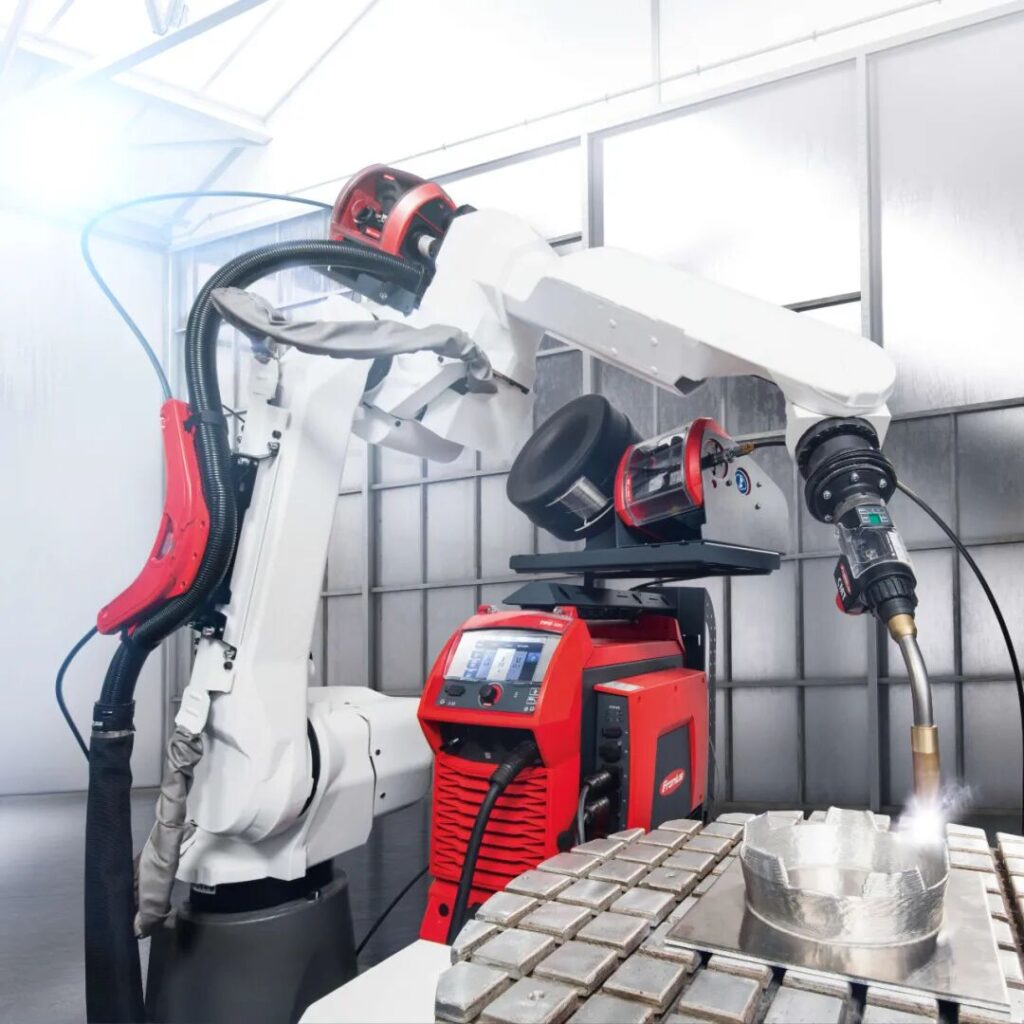
TPS/i Intelligent Welding Platform
1. Advantages of Laser-Arc Hybrid Welding
1. Higher Welding Efficiency
In conventional arc welding, welding speed is usually limited to around 0.6 m/min, with a single-pass penetration depth of roughly 3 mm.
In contrast, laser-arc hybrid welding enables speeds up to 1.8 m/min, and laboratory tests have shown that even 20 mm plates can be welded from one side with full formation on both sides.
The thicker the material, the more significant the efficiency advantage becomes.
2. Superior Welding Quality
Because the hybrid process produces a smaller heat-affected zone, it minimizes distortion while maintaining stable welding characteristics. Compared with conventional laser welding, hybrid welding improves bridging ability and offers greater tolerance for joint gaps—an essential advantage in pipeline field operations.
3. Lower Operating Cost
The hybrid process provides deeper penetration, reducing filler material consumption.
Although initial investment is higher than standard arc welding, the reduced manpower requirement and higher operational efficiency result in significantly lower long-term costs.
4. Enhanced Material Compatibility
The hybrid method is suitable for various metals and delivers clean, well-shaped welds.
Its versatility makes it applicable across multiple industries, including shipbuilding, heavy machinery, automotive manufacturing, rail transit, and notably, oil and gas pipelines.
2. Application in the Oil & Gas Pipeline Industry
Pipeline welding quality directly affects project reliability, construction efficiency, and long-term pipeline safety.
Traditional orbital automatic welding systems used in pipeline construction are constrained by limited welding speed and shallow penetration per pass. After years of incremental optimization, the performance ceiling of conventional processes has essentially been reached.
This is precisely where laser-arc hybrid welding shows its value.
With its high welding speed, strong penetration capability, and excellent weld quality, hybrid welding breaks through the limitations of traditional arc-based technologies and significantly enhances pipeline construction efficiency.
3. FNS Pipeline Technology’s Hybrid Welding Solution
FNS Pipeline Technology Co., Ltd. has developed an advanced hybrid welding system that integrates:
- Fronius TPS/i intelligent arc welding platform
- Raycus RFL-C20000 high-power continuous laser source
This combination provides stable energy coupling between the arc and laser, delivering consistent weld penetration and improved process reliability for pipeline applications.
4. Welding Trial on X80 Pipeline Steel
Test Material
- X80 pipeline-grade steel
- Plate size: 260 mm × 450 mm × 18.4 mm
A specially designed groove with a 10–14 mm land was machined to ensure weld strength while reducing filler consumption. The welding team simulated various welding positions by adjusting plate angles and fine-tuning process parameters accordingly.
Result:
Across all positions, weld formation was uniform, stable, and free of major defects—meeting industry requirements for pipeline engineering.
5. Efficiency Assessment
Using optimized parameters, the hybrid process demonstrated exceptional performance.
Based on a 450 mm weld length, the welding speed achieved by laser-arc hybrid welding can be more than nine times faster than traditional processes, without compromising weld integrity.
This dramatic improvement highlights the technology’s potential for large-scale adoption in oil and gas pipeline construction.
Laser-arc hybrid welding represents a major advancement for the pipeline industry. With its deep penetration, high speed, and consistent weld quality, it effectively addresses the challenges of welding thick-walled steel used in long-distance pipeline projects.
FNS Pipeline Technology Co., Ltd. continues to lead the way by integrating high-power laser sources with intelligent arc welding systems, providing reliable and efficient hybrid welding solutions tailored for oil and gas applications.


