


Cement Plant Wear Solutions: How Hardfacing Wear Plates Extend Equipment Life in Cement Production
Hardfacing Wear Plates for Cement Plants have become one of the most effective solutions for combating severe abrasion, impact, and erosion in modern cement production facilities. From dynamic classifiers and mixer liners to screen plates and powder chutes, Hardfacing Wear Plates for Cement Plants provide superior wear resistance, longer service life, and significantly lower maintenance costs.
At FNS Pipeline Technology Co., Ltd., we manufacture and engineer customized hardfacing wear solutions for customers in the cement, mining, power generation, steel, and bulk material handling industries. By combining advanced alloy design with automated hardfacing technology, FNS helps cement producers minimize downtime and maximize equipment reliability.
Why Wear Is a Major Challenge in Cement Plants
Every stage of cement production exposes equipment to aggressive operating conditions.
Typical wear mechanisms include:
- High-velocity abrasive wear
- Continuous particle erosion
- Heavy impact loading
- Sliding abrasion
- Dust erosion
- Material buildup
- Cyclic fatigue
Over time, these conditions can lead to:
- Surface wear
- Perforation
- Component deformation
- Structural failure
- Unexpected shutdowns
- Increased maintenance costs
Instead of replacing expensive equipment, many cement manufacturers now install Hardfacing Wear Plates for Cement Plants on critical wear surfaces to protect valuable assets and extend operational life.
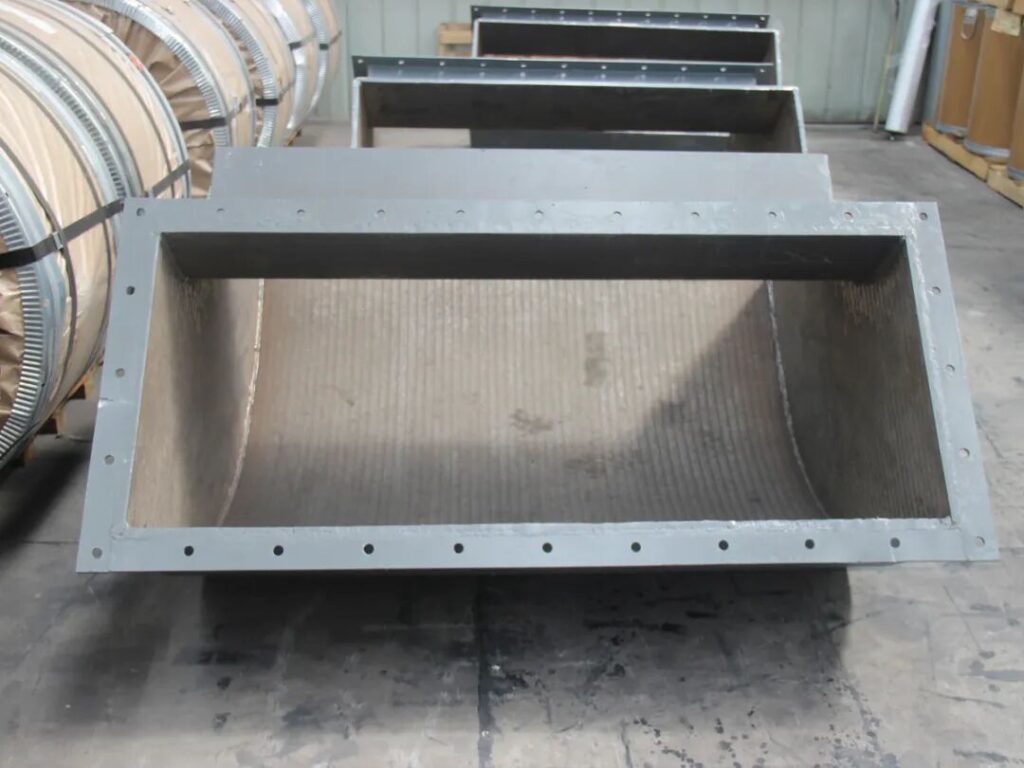
Wear-resistant powder chute manufactured by FNS Pipeline Technology
Why Hardfacing Wear Plates Outperform Conventional Steel
Traditional carbon steel plates wear rapidly under continuous exposure to cement clinker, limestone, sand, and fly ash.
FNS hardfacing wear plates combine:
- Tough steel substrate
- High-chromium alloy overlay
- Metallurgical bonding
- Excellent impact resistance
- Outstanding abrasion resistance
Unlike conventional wear liners, the alloy layer remains firmly bonded to the base steel, preventing premature delamination while maintaining structural strength.
Typical Cement Plant Components Protected by Hardfacing Wear Plates
1. Dynamic Classifier Blades
Dynamic classifier blades are among the fastest-wearing components in a cement grinding system.
Operating at high rotational speed, they continuously separate fine and coarse particles while being exposed to high-speed powder erosion.
Common Problems
- Edge wear
- Thickness reduction
- Loss of classification accuracy
- Frequent shutdowns
FNS Solution
FNS applies high-chromium hardfacing overlays that provide:
- Excellent resistance to powder erosion
- Stable blade geometry
- Reduced wear rate
- Improved classification efficiency
- Longer maintenance intervals
2. Mixer Liners
Mixer liners protect the interior shell of concrete and cement mixers.
During operation, clinker, aggregate, sand, and cement continuously impact and slide across the liner surface.
Wear Conditions
- Abrasive wear
- Impact wear
- Cyclic loading
FNS Solution
Our hardfacing wear plates offer:
- High hardness
- Excellent toughness
- Crack resistance
- Strong metallurgical bonding
- Long service life under continuous production
The result is better protection of the mixer body and fewer liner replacements.
3. Equipment Protective Covers
Conveyors, rotary equipment, and screening systems use protective covers to shield bearings, shafts, and structural components.
These covers are constantly exposed to flying particles and abrasive dust.
FNS Solution
High-density hardfacing layers help:
- Resist impact damage
- Prevent perforation
- Protect internal equipment
- Improve plant safety
- Extend structural service life
4. Screening Plates
Screen plates determine the efficiency and accuracy of particle separation.
As aggregates and clinker repeatedly strike the screening surface, wear concentrates around the screen openings.
Common Issues
- Enlarged openings
- Hole deformation
- Reduced screening accuracy
- Increased maintenance
FNS Solution
FNS wear plates feature:
- Uniform hardness
- Excellent fatigue resistance
- Superior sliding wear resistance
- High bond strength
These characteristics help maintain screen geometry and improve product consistency.
5. Powder Chutes
Powder chutes transport cement powder, raw meal, fly ash, and other fine materials through gravity flow.
This is one of the most severe wear locations in a cement plant.
Wear Challenges
- Continuous particle erosion
- High sliding abrasion
- Material buildup
- Leakage
- Dust emissions
FNS Solution
Hardfacing Wear Plates for Cement Plants provide:
- Smooth wear-resistant surfaces
- Reduced material adhesion
- Improved flow efficiency
- Less blockage
- Lower dust leakage
- Longer chute life
Why Metallurgical Bonding Matters
Unlike mechanically attached liners, FNS hardfacing technology creates a true metallurgical bond between the alloy layer and the steel substrate.
Benefits include:
- No peeling
- No separation
- Higher load capacity
- Better thermal stability
- Longer service life
This makes hardfacing wear plates particularly suitable for continuous heavy-duty cement production.
FNS Manufacturing Advantages
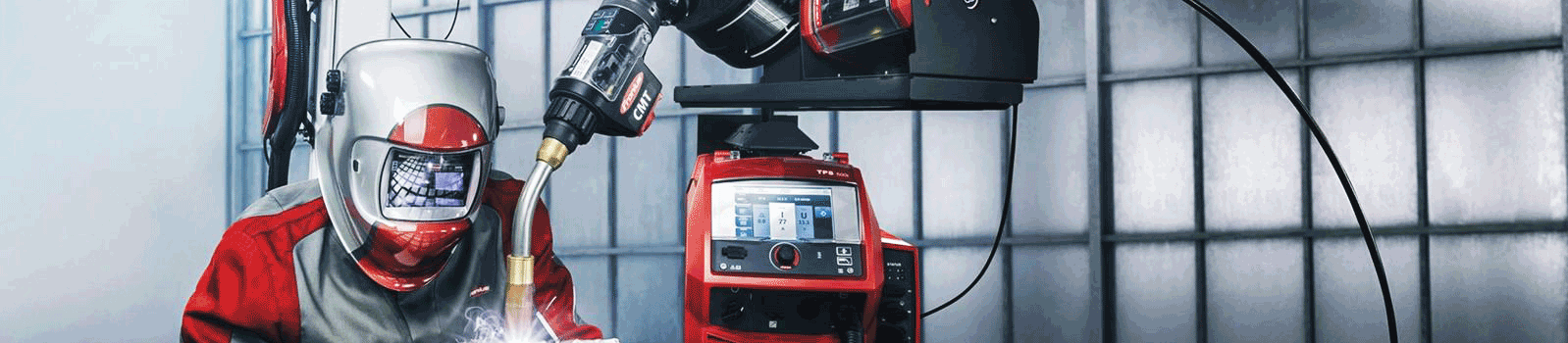
FNS Pipeline Technology Co., Ltd. integrates advanced hardfacing technologies, including:
- Plasma Transferred Arc (PTA) Hardfacing
- Laser Cladding
- Automated Overlay Welding
- Wear Plate Fabrication
- CNC Machining
- Quality Inspection
- Non-Destructive Testing (NDT)
Each wear plate is manufactured according to customer drawings, operating conditions, and expected service life requirements.
FNS Project Case
High-Chromium Hardfacing Wear Plates for a Cement Grinding Plant
A cement manufacturer experienced rapid wear of classifier blades and powder chutes due to continuous exposure to abrasive clinker and cement powder.
FNS recommended customized high-chromium hardfacing wear plates manufactured using automated overlay welding.
Results
- Classifier blade service life increased by over 2.5 times
- Powder chute maintenance frequency reduced significantly
- Material flow became more stable
- Downtime decreased substantially
- Annual maintenance costs were reduced
The customer later expanded the solution to mixer liners and screening plates across the production line.
Why Cement Manufacturers Choose FNS
FNS provides complete wear protection solutions rather than simply supplying wear-resistant materials.
Our engineering team assists customers with:
- Wear analysis
- Material selection
- Alloy optimization
- Hardfacing process development
- Equipment remanufacturing
- Customized wear plate manufacturing
- On-site technical support
This integrated approach helps maximize equipment reliability while minimizing lifecycle costs.
Frequently Asked Questions
What are hardfacing wear plates?
Hardfacing wear plates consist of a tough steel base with a wear-resistant alloy overlay created through metallurgical bonding. They are widely used to protect equipment from severe abrasion and impact.
Which cement plant equipment benefits most from hardfacing wear plates?
Common applications include:
- Dynamic classifier blades
- Mixer liners
- Powder chutes
- Screen plates
- Protective covers
- Cyclones
- Hoppers
- Screw conveyors
Why are high-chromium overlays commonly used?
High-chromium alloys provide excellent abrasion resistance against clinker, limestone, cement powder, and other highly abrasive materials.
Can hardfacing wear plates be customized?
Yes. FNS manufactures wear plates in customized dimensions, alloy compositions, thicknesses, and profiles based on customer operating conditions.
How much longer can hardfacing wear plates last?
Actual service life depends on operating conditions, but hardfacing wear plates commonly last 2–5 times longer than conventional carbon steel components.
Are hardfacing wear plates suitable for equipment remanufacturing?
Absolutely. Hardfacing technology is widely used to repair worn components, restore dimensions, and improve wear resistance beyond the original design.
Which hardfacing process is best for cement plant applications?
The optimal process depends on the component and wear mechanism. FNS commonly recommends PTA hardfacing, laser cladding, or automated overlay welding for cement plant equipment requiring long service life and consistent wear resistance.
How does FNS ensure weld quality?
Every project follows strict quality control procedures, including:
- Welding Procedure Specification (WPS)
- Qualified welders
- Dimensional inspection
- Hardness testing
- PT/UT testing when required
- Final visual inspection


