


7 Common Welding Defects in Nickel Alloy Hardfacing and How to Prevent Them
Although Nickel alloy hardfacing defects can significantly reduce corrosion resistance and service life, most welding problems are preventable through proper process control. Understanding why defects occur helps manufacturers achieve consistent overlay quality and avoid costly repairs.
At FNS Pipeline Technology Co., Ltd., our automated hardfacing systems combine optimized welding parameters, strict quality control, and experienced engineering support to minimize common defects in nickel alloy overlay welding.
1. Hot Cracking
Cause:
- Excessive heat input
- High restraint
- Improper bead shape
Solution:
- Small current
- Multiple passes
- Convex weld bead
2. Porosity
Cause:
- Moisture
- Oil contamination
- Poor shielding gas
Solution:
- Clean base metal
- High-purity argon
- Dry filler material
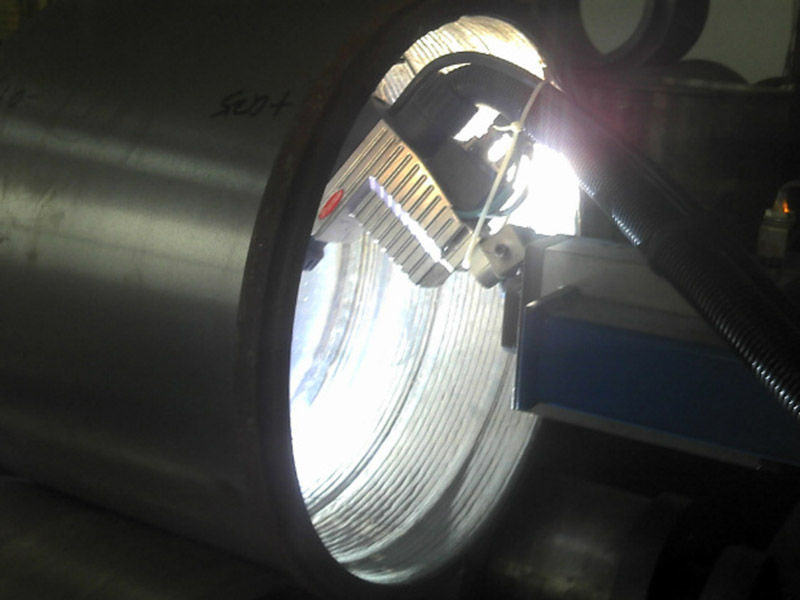
Cladded pipeline with nickel-based alloy overlay for offshore applications
3. Lack of Fusion
Cause:
- Incorrect groove
- Improper torch angle
- Fast travel speed
Solution:
- Groove optimization
- Stable arc
- Multi-pass welding
4. Oxidation
Cause:
Insufficient shielding.
Solution:
Continuous argon protection throughout welding.
5. Undercut
Cause:
High current or excessive travel speed.
Solution:
Pause slightly at bead edges and maintain a short arc.
6. Distortion
Cause:
High heat input.
Solution:
Control interpass temperature below 100°C.
7. Slag Inclusion
Cause:
Poor cleaning between passes.
Solution:
Thorough grinding and inspection before each subsequent layer.
Quality Inspection
After welding, FNS recommends:
- Visual inspection
- PT testing
- UT testing
- Hardness testing
- Metallographic analysis
- Corrosion testing
FNS Project Example
An offshore valve manufacturer experienced repeated porosity in nickel alloy overlays.
FNS optimized:
- Shielding gas flow
- Groove angle
- Heat input
- Travel speed
The updated procedure eliminated visible porosity and significantly improved first-pass acceptance rates.
FAQ
Why are nickel alloys more prone to cracking?
Their lower fluidity and higher solidification stress increase hot cracking sensitivity.
Should heat input be increased?
No. Higher heat often increases defects.
Is PT inspection required?
Yes. Dye penetrant testing is recommended after machining.
What interpass temperature is recommended?
Typically below 100°C.


