



Nickel Alloy Hardfacing vs Stainless Steel Overlay: Which Solution Offers Better Long-Term Protection?
Choosing between Nickel Alloy Hardfacing vs Stainless Steel Overlay is a common challenge in industries such as oil & gas, petrochemical processing, offshore engineering, power generation, and mining. Both technologies improve the durability of carbon steel components, but their corrosion resistance, welding behavior, service life, and operating costs differ significantly.
At FNS Pipeline Technology Co., Ltd., engineers evaluate operating temperature, corrosion media, mechanical loading, and maintenance requirements before recommending either solution. Selecting the correct overlay material can dramatically reduce maintenance frequency and extend equipment service life.
Why Surface Overlay Is Preferred Over Solid Alloy Components
Manufacturing an entire valve, pipeline fitting, or pressure vessel from high-alloy material is often unnecessary and expensive.
Instead, manufacturers typically use:
- Carbon steel for structural strength
- Stainless steel or nickel alloy as the protective surface
This combination reduces material costs while delivering excellent corrosion performance where it is needed most.
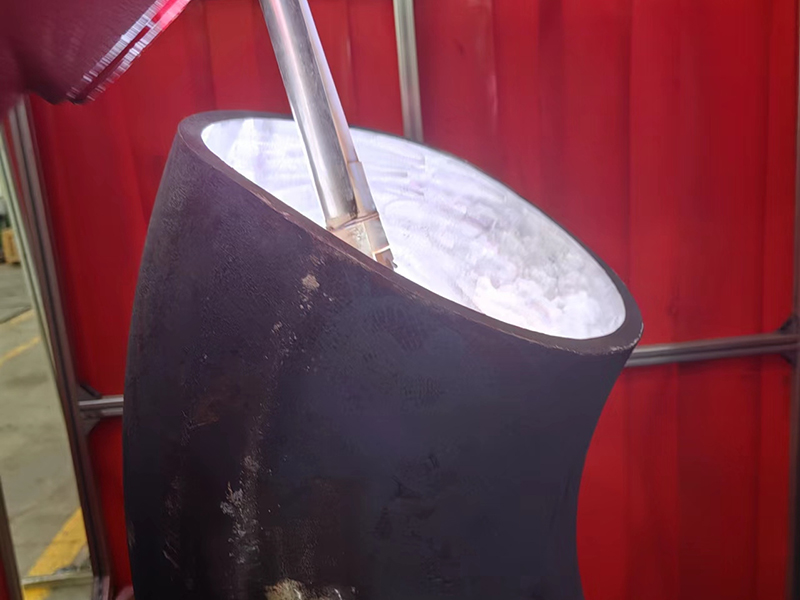
Cladded 90 degree long radius elbow with nickel-based alloy 625 weld overlay
What Is Stainless Steel Overlay?
Stainless steel overlay deposits corrosion-resistant stainless steel onto carbon steel using welding processes such as:
- GTAW
- GMAW
- SAW
- Strip Cladding
Common materials include:
- 304L
- 316L
- 317L
- Duplex Stainless Steel
Advantages include:
- Lower cost
- Good corrosion resistance
- Easy fabrication
- Excellent availability
However, stainless overlays may struggle in:
- High chloride environments
- Strong acids
- Sour gas
- High-temperature oxidation
What Is Nickel Alloy Hardfacing?
Nickel alloy hardfacing deposits a nickel-based alloy onto the component surface through metallurgical bonding.
Popular alloys include:
- Inconel 625
- Inconel 686
- Hastelloy C276
- Alloy 825
Compared with stainless steel, nickel alloys provide:
- Higher pitting resistance
- Better crevice corrosion resistance
- Superior resistance to H₂S
- Better stress corrosion cracking resistance
- Excellent high-temperature performance
Corrosion Resistance Comparison
| Property | Stainless Steel Overlay | Nickel Alloy Hardfacing |
| Chloride Resistance | Good | Excellent |
| Sour Service | Moderate | Excellent |
| Acid Resistance | Good | Outstanding |
| High Temperature | Good | Excellent |
| Pitting Resistance | Moderate | Excellent |
| Offshore Service | Good | Excellent |
Welding Characteristics
Nickel alloys require:
- Lower heat input
- Short arc length
- Better shielding
- Lower interpass temperature
Stainless steel is generally easier to weld and more forgiving during fabrication.
For highly corrosive applications, however, the additional welding complexity is justified by the significantly longer service life.
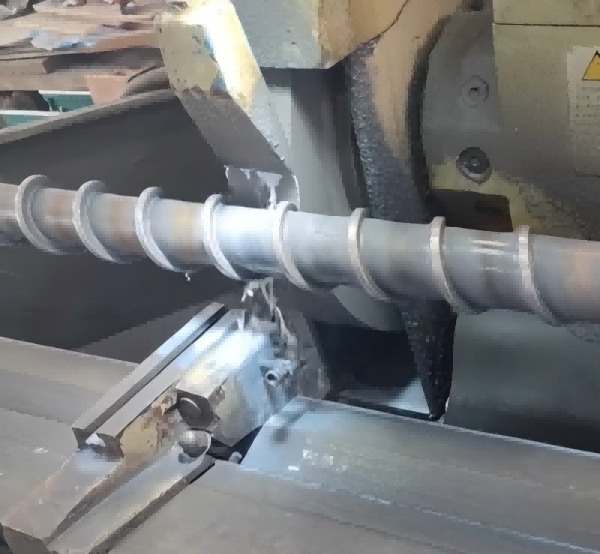
D60 nickel-based powder for screw repair on plastic extruder screw
Cost Comparison
Initial investment:
- Stainless Steel Overlay ✓ Lower
- Nickel Alloy Hardfacing ✓ Higher
Lifecycle cost:
- Stainless Steel Overlay ✓ Moderate
- Nickel Alloy Hardfacing ✓ Lower maintenance
For offshore platforms or remote pipelines, reduced shutdown costs often outweigh the higher initial investment.
Typical Applications
Stainless Steel Overlay
- Water treatment
- Food processing
- Low-chloride pipelines
- Storage tanks
Nickel Alloy Hardfacing
- Offshore platforms
- Sour gas pipelines
- Chemical reactors
- High-temperature valves
- Pressure vessels
- Internal bore cladding
FNS Project Example
A petrochemical customer required corrosion protection for reactor nozzles exposed to chloride-containing media.
Initially, stainless steel overlay was considered. After corrosion analysis, FNS engineers recommended Inconel 625 hardfacing.
After commissioning, the equipment showed:
- Lower corrosion rate
- Longer inspection intervals
- Stable weld quality
- Reduced maintenance costs
FAQ
Which overlay lasts longer?
Nickel alloy overlays typically provide a longer service life in aggressive environments.
Is stainless steel overlay cheaper?
Yes, but lifecycle costs may be higher if corrosion is severe.
Which material meets NACE sour service?
Nickel alloys such as Inconel 625 are commonly selected for sour service applications.
Can nickel alloy be applied on carbon steel?
Yes. Metallurgical bonding creates an excellent corrosion-resistant surface.


