



Diamond vs Tungsten Carbide for Mining Tools: Which Hardfacing Solution Wins?
When comparing diamond vs tungsten carbide for mining tools, the decision directly impacts tool life, downtime, and operating costs. At FNS Pipeline Technology Co., Ltd., both materials are widely used in high-wear applications-but each excels under different conditions.
Understanding the difference between diamond vs tungsten carbide for mining tools helps engineers choose the right solution for abrasive, impact, or mixed environments.
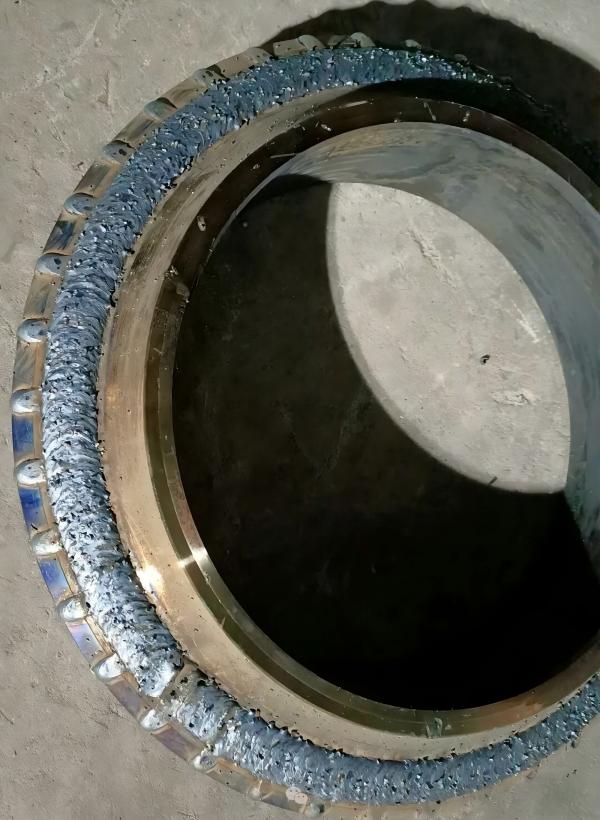
Tungsten carbide alloy particle cladding process on industrial components
Hardness Comparison
- Diamond: Highest known hardness
- Tungsten Carbide (WC): Extremely high but lower than diamond
👉 Conclusion: Diamond wins in extreme abrasion resistance
Impact Resistance
- Diamond: Brittle under heavy impact
- Tungsten Carbide: Better toughness
👉 Conclusion: WC performs better in impact-heavy conditions
Thermal Performance
- Diamond: Excellent heat dissipation
- WC: Good but less efficient
Cost Comparison
- Diamond coating: Higher upfront cost
- WC coating: More economical
👉 But lifecycle cost often favors diamond in high-wear scenarios
FNS Case Study
Application: Mining cutting picks
Solution: Hybrid strategy
- Diamond coating for cutting edges
- WC reinforcement for support zones
Result:
- Tool life ↑ 3×
- Maintenance ↓ 40%
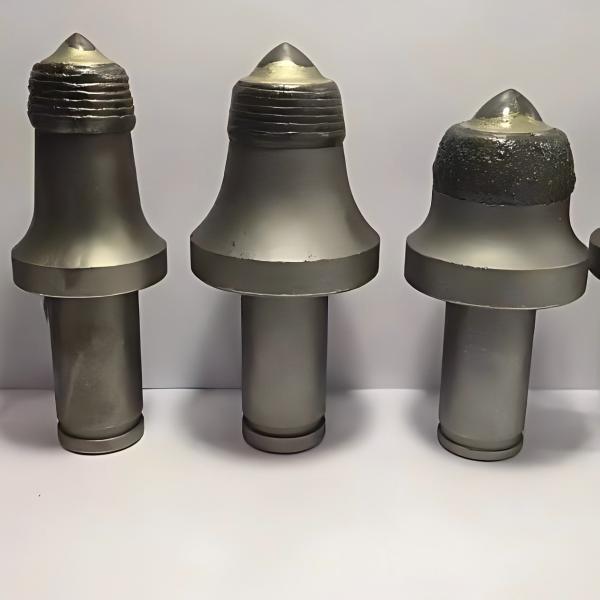
Wear resistant diamond hardfacing layer on cutting tools
When to Choose Each
Choose Diamond When:
- Extreme abrasion (sand, rock)
- Continuous cutting
Choose Tungsten Carbide When:
- High impact loads
- Mixed wear conditions
Related Articles:
👉 diamond particle hardfacing for mining cutting tools
👉 industrial wear resistant coating solutions
FAQ
Q1: What is the main difference between diamond and tungsten carbide for mining tools?
The key difference in diamond vs tungsten carbide for mining tools is hardness versus toughness. Diamond offers extreme wear resistance, while tungsten carbide provides better impact resistance.
Q2: Which material lasts longer in mining applications?
In highly abrasive conditions such as sand or rock cutting, diamond-coated tools generally last longer than tungsten carbide tools.
Q3: Is tungsten carbide better for impact conditions?
Yes. Tungsten carbide is more resistant to impact and shock loads, making it suitable for mixed wear environments.
Q4: Can diamond coatings fail under impact?
Yes. Diamond coatings can crack or chip under heavy impact due to their brittle nature.
Q5: Which is more cost-effective: diamond or tungsten carbide?
Tungsten carbide has a lower upfront cost, but diamond may offer better long-term value due to extended service life.
Q6: Can diamond and tungsten carbide be used together?
Yes. Many advanced solutions combine both materials to balance wear resistance and toughness.
Q7: Which material is better for TBM cutter tools?
For TBM applications, tungsten carbide is commonly used, but diamond-enhanced coatings are increasingly applied in high-abrasion zones.


