



Laser Cladding Process for Manufacturing High-Speed Steel Cutting Tools
High-speed steel (HSS) cutting tools are widely used in the machining industry due to their excellent machinability and toughness. However, when machining hard materials, cutting temperatures can reach around 1000°C, which exceeds the typical annealing temperature of HSS (860–880°C). As a result, tool hardness drops rapidly, making it difficult to maintain cutting performance.
During machining, tools endure impact loads, vibration, and intense friction from the workpiece and chips. This leads to common failures such as wear, edge rounding, chipping, and even tool breakage—reducing machining accuracy, lowering productivity, and increasing manufacturing costs.
Laser Cladding: A Modern Solution for Tool Surface Engineering
The laser cladding process has developed rapidly in recent decades and is now recognized as one of the most effective surface modification technologies. It offers significant advantages:
- low heat input and minimal workpiece deformation
- ability to create high-hardness coatings
- suitability for local or hard-to-access areas
- high bonding strength with the tool substrate
- wide selection of alloying powders, including metal-ceramic composites
For HSS cutting tools, applying a laser cladding coating on the cutting edge has proven effective in significantly improving tool performance.
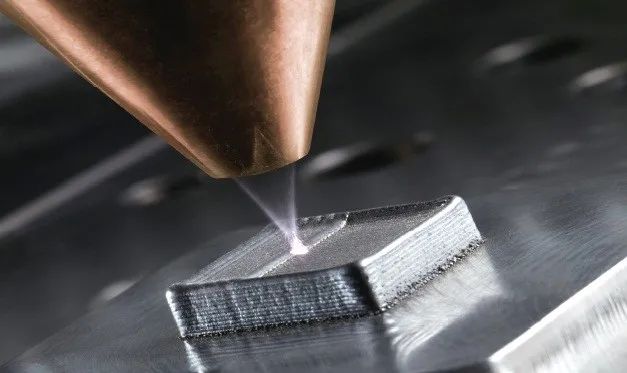
Laser cladding coating on high-speed steel cutting tool by FNS Pipeline Technology Co., Ltd.
Why Laser Cladding Is a Superior Approach for HSS Tools
Traditional HSS cutting tools are typically made from a solid piece of material. Once the cutting edge becomes worn, the entire tool must be scrapped—causing material waste and high production costs.
Using laser cladding, FNS Pipeline Technology Co., Ltd. enhances only the cutting-edge zone with a pre-set alloy powder. Because the cladding area is small, the laser cladding process:
- reduces the consumption of expensive alloy materials
- lowers manufacturing costs
- preserves the toughness of the HSS substrate
- adds a highly wear-resistant, corrosion-resistant, and thermally stable surface layer
The result is a cutting tool with both high hardness and high toughness, effectively resolving the traditional contradiction between tool durability and tool strength.
Overcoming Cracking: Key Technical Considerations
A major challenge in laser cladding HSS tools is the tendency of the coating to develop cracks. Cracking typically results from residual stress formed when the molten cladding layer contracts during cooling while being constrained by the tool substrate.
FNS addresses this challenge through several methods:
1. Preheating and Post-Heat Treatment
Reduces temperature gradients and prevents stress-induced cracking.
2. Alloy Powder Optimization
Adding Co, Mo, and rare-earth elements improves:
- wetting behavior
- toughness of the coating
- refinement of microstructure
- reduction of thermal shrinkage stress
3. Use of Nanocomposite Powders
Nanostructured composite materials further enhance:
- hardness
- bonding strength
- crack resistance
4. Process Parameter Optimization
Laser power, scanning speed, spot size, and overlap ratios are fine-tuned to achieve stable metallurgical bonding.
Through these methods, FNS Pipeline Technology Co., Ltd. ensures that the laser cladding layer forms uniformly and reliably, even on high-performance cutting tools.
Performance Benefits After Laser Cladding
Laser-cladded HSS cutting tools provide:
1. High Wear Resistance
The ceramic-reinforced coating greatly improves resistance to abrasive wear and tool-edge deformation.
2. Improved Thermal Stability
The coating offers strong resistance to high-temperature oxidation, maintaining sharpness even under intense heat.
3. Enhanced Cutting Performance
Cladded tools exhibit superior red hardness and cutting efficiency, especially when machining hardened steels or difficult-to-cut alloys.
4. Longer Tool Life and Lower Costs
Minimal powder use and reduced reliance on costly rare-metal alloys make manufacturing more economical and environmentally friendly.
5. Better Tool Toughness
The HSS substrate retains its strong mechanical toughness, protecting the cutting edge from chipping and breakage.
FNS Expertise in Laser Cladding for Cutting Tool Manufacturing
With extensive experience in metal remanufacturing and advanced surface engineering technologies, FNS Pipeline Technology Co., Ltd. provides reliable, high-performance laser cladding solutions for HSS cutting tools. Our systems support:
- automated processing
- precise energy control
- customized alloy powder formulations
- stable metallurgical bonding coatings
- consistent and repeatable production quality
As modern machining continues to demand higher efficiency and durability, laser cladding technology will play an increasingly important role in developing next-generation wear-resistant cutting tools.


