


Stellite 6 Hardfacing vs HVOF Tungsten Carbide Coating: Valve Surface Hardening Comparison
Stellite 6 hardfacing vs HVOF tungsten carbide coating is a critical comparison when selecting the right valve surface hardening technology for severe service conditions. Whether dealing with cavitation erosion, flashing flow, or abrasive slurry, the right surface solution determines valve performance and lifespan.
At FNS Pipeline Technology Co., Ltd., engineers frequently evaluate Stellite 6 hardfacing vs HVOF tungsten carbide coating to match specific operating conditions and ensure optimal durability.
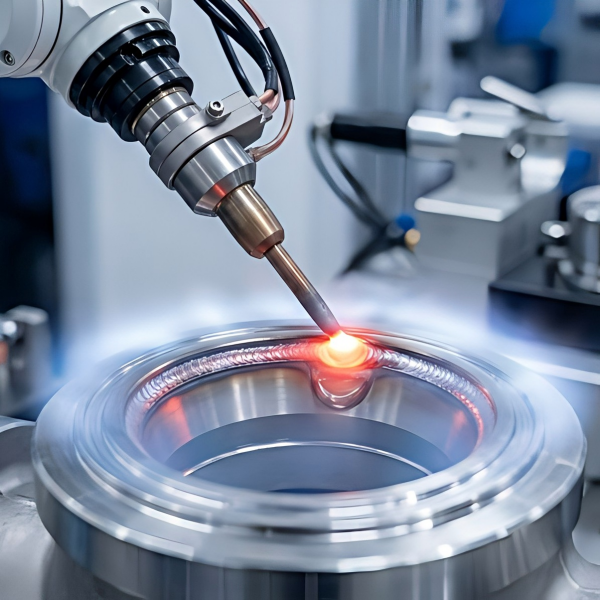
Stellite 6 hardfacing valve surface process
Why Not Use Solid Hard Alloy Valves?
A common question in the field is: Why not make the entire valve from hard alloy?
The answer comes down to two factors:
- Cost – solid hard alloys are extremely expensive
- Brittleness – excessive hardness leads to cracking under impact
Instead, the industry adopts a “tough core + hard surface” strategy:
- Core material: 316 stainless steel (tough, cost-effective)
- Surface layer: ultra-hard protective coating
This is where Stellite 6 hardfacing vs HVOF tungsten carbide coating becomes essential.

HVOF tungsten carbide coating on valve components
Stellite 6 Hardfacing: The Proven Heavy-Duty Solution
Stellite 6 hardfacing is a cobalt-based alloy coating (Co-Cr-W) applied using welding methods such as PTA (Plasma Transferred Arc).
Key Advantages
✔ Metallurgical Bonding
The coating fuses with the base metal, forming a permanent bond.
✔ Thick Coating Layer
- Typical thickness: 1.0–2.0 mm
✔ Excellent Impact Resistance
- Resistant to cavitation and particle impact
✔ High Temperature & Corrosion Resistance
- Suitable for harsh environments including sour gas (NACE compliant)
Limitations
- Moderate hardness: 38–45 HRC
- Not ideal for extreme abrasive wear (e.g., sand slurry)
- High heat input may cause distortion
👉 Related technology: plasma cladding technology
HVOF Tungsten Carbide Coating: The High-Hardness Specialist
HVOF tungsten carbide coating uses high-velocity oxygen fuel spraying to deposit WC particles at supersonic speed.
Key Advantages
✔ Extreme Hardness
- Up to 70 HRC+ (>1000 HV)
✔ Dense Coating Structure
- Excellent resistance to abrasive wear
✔ Low Temperature Process
- Minimal substrate deformation
👉 Often used in industrial wear resistant coating solutions
Limitations
✖ Mechanical Bonding
- No metallurgical fusion
✖ Thin Coating
- Thickness: 0.2–0.4 mm
✖ Risk of Spalling
- Under impact or cavitation, coating may peel off
✖ Binder Corrosion Risk
- WC-Co coatings may degrade in acidic environments
FNS Project Case: Valve Trim Performance Upgrade
Project: Control Valve Trim Upgrade
Industry: Oil & Gas
Challenge
- Severe cavitation damage
- High-pressure flashing flow
Solution
FNS selected Stellite 6 hardfacing vs HVOF tungsten carbide coating based on working conditions:
- Stellite 6 for cavitation zones
- HVOF WC for abrasive sections
Results
- Valve service life extended by 2–3×
- Reduced maintenance frequency
- Improved operational stability
👉 For wear mechanisms, see bearing housing failure analysis
Side-by-Side Comparison
| Feature | Stellite 6 Hardfacing | HVOF Tungsten Carbide |
|---|---|---|
| Bonding | Metallurgical | Mechanical |
| Thickness | 1.0–2.0 mm | 0.2–0.4 mm |
| Hardness | Medium | Very High |
| Impact Resistance | Excellent | Moderate |
| Wear Resistance | Good | Excellent |
How to Choose the Right Solution
Use Stellite 6 Hardfacing When:
- Cavitation or flashing occurs
- High impact loads exist
- Sour gas (H₂S) environments
Use HVOF Tungsten Carbide Coating When:
- Severe abrasive wear (sand, slurry)
- Large valve components (e.g., ball valves)
- Minimal thermal distortion required
Engineering Decision Guide
| Working Condition | Recommended Solution | Reason |
|---|---|---|
| Cavitation / flashing | Stellite 6 | Anti-impact & thick coating |
| Slurry / ash / sand | HVOF WC | Extreme hardness |
| Large ball valves | HVOF WC | No deformation |
| Acidic gas (NACE) | Stellite 6 | Corrosion resistant |
Why Choose FNS Pipeline Technology Co., Ltd.
FNS offers complete solutions for Stellite 6 hardfacing vs HVOF tungsten carbide coating, including:
- Advanced cladding and spraying equipment
- Process optimization based on working conditions
- Precision machining and finishing
- Industry-specific engineering support
FAQ
1. What is the difference between Stellite 6 and HVOF coating?
Stellite 6 hardfacing vs HVOF tungsten carbide coating differs mainly in bonding method, hardness, and application scenarios.
2. Which one is better for cavitation?
Stellite 6 is better due to its strong metallurgical bond and impact resistance.
3. Which one is better for abrasive wear?
HVOF tungsten carbide coating is superior due to its extremely high hardness.
4. Can both technologies be combined?
Yes, many applications use both depending on different wear zones.
5. Which is more cost-effective?
It depends on application. HVOF may reduce wear, while Stellite reduces failure risk.


