



Tungsten Carbide (WC) Alloy Particle Cladding Technology for Extreme Wear Resistance
Tungsten carbide alloy particle cladding is an advanced surface enhancement technology used to significantly improve the wear resistance, hardness, and durability of industrial components. By depositing hard alloy particles such as tungsten carbide (WC) onto the substrate surface through a cladding process, a high-performance composite coating is formed.
At FNS Pipeline Technology Co., Ltd., tungsten carbide alloy particle cladding is widely applied to extend the service life of critical components operating in harsh environments, including mining, oil & gas, and heavy machinery industries.
What is Tungsten Carbide Alloy Particle Cladding?
Tungsten carbide alloy particle cladding is a surface engineering process in which hard particles (such as WC or diamond particles) are fused onto a metal substrate using a heat source like plasma or arc welding.
Key Characteristics
- High hardness and wear resistance
- Excellent impact resistance
- Strong metallurgical bonding
- Resistance to corrosion and high temperatures
Compared with plasma cladding technology, this process focuses on embedding hard particles into the coating to maximize wear resistance.
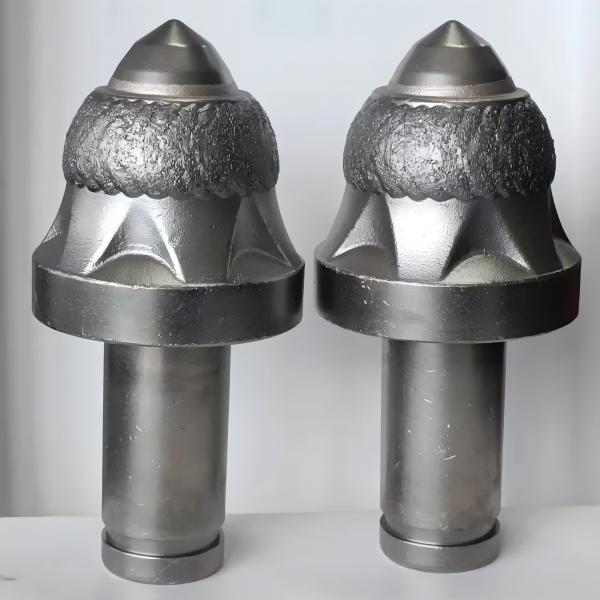
Tungsten carbide alloy particle surfacing process on mining cutter picks
Technical Principle and Process Flow
The core of tungsten carbide alloy particle cladding lies in melting both the alloy particles and a thin layer of the substrate to create a metallurgically bonded coating.
1. Surface Preparation
- Remove oil, rust, and oxides
- Sandblasting or machining if necessary
- Ensure strong bonding
2. Particle Selection
Choosing the right particles is critical:
- WC particles → high wear resistance
- Nickel-based alloys → high temperature & corrosion resistance
Typical WC particle size: 40–60 mesh
3. Cladding Process Parameters
Using automated or semi-automated equipment:
- Welding speed: 0.5–2 m/min
- Current: 100–300 A
- Controlled powder feeding rate
Parameters are optimized by FNS based on specific applications.
4. Post-Processing and Inspection
- Machining (turning, grinding, polishing)
- Non-destructive testing
- Metallographic analysis
Application Fields
Tungsten carbide alloy particle cladding is widely used in:
Mining Industry
- Excavator bucket teeth
- Crusher hammers
Oil & Gas Industry
- Valves
- Drilling tools
Aerospace & Energy
- Turbine components
- Boiler pipes
Tooling and Molds
- Dies and forming tools
Related applications include TBM cutter tools cladding for tunneling equipment.
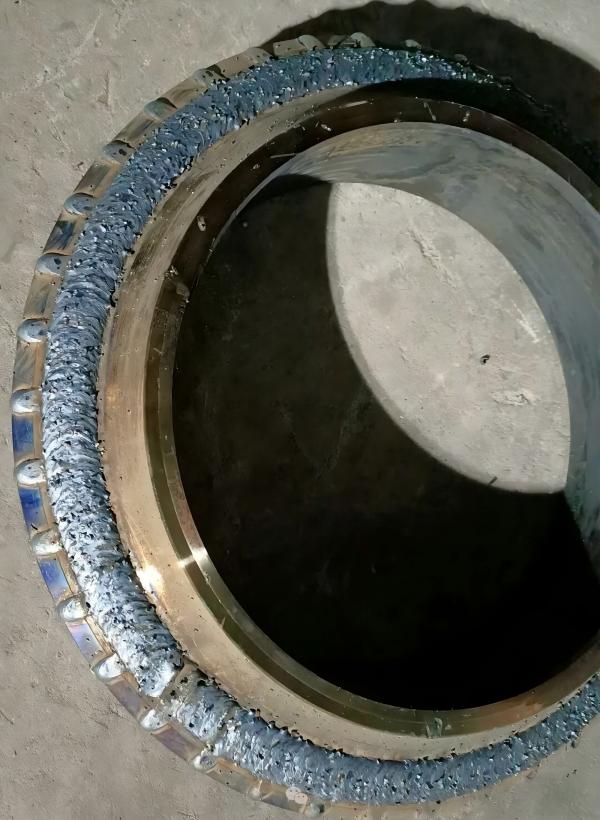
Tungsten carbide alloy particle cladding process on industrial components
FNS Project Case
Project: TBM Cutter Ring Reinforcement
Industry: Tunneling / Mining
Problem
- Severe wear and impact damage
- Frequent replacement required
Solution
- Tungsten carbide alloy particle cladding using FNS equipment
- Optimized WC particle distribution
Results
- Wear resistance significantly improved
- Service life extended by 2–4 times
- Replacement frequency reduced
👉 For precision coating alternatives, see laser cladding application case
Key Advantages
✔ Superior Wear Resistance
WC particles provide extremely high hardness
✔ Extended Service Life
Components last 2–4× longer
✔ Strong Bonding
Metallurgical bonding ensures durability
<h3✔ Cost Efficiency
Reduces downtime and replacement costs
👉 Often integrated with industrial wear resistant coating solutions for maximum performance.
When to Use This Technology
Choose tungsten carbide alloy particle cladding when:
- Components operate under severe abrasion
- High impact and wear occur simultaneously
- Frequent part replacement increases costs
FAQ
1. What is tungsten carbide alloy particle cladding?
Tungsten carbide alloy particle cladding is a process that deposits hard WC particles onto a metal surface to improve wear resistance and durability.
2. What particle size is typically used?
Common WC particle sizes range from 40–60 mesh, depending on the application.
3. How much can service life be improved?
Typically, tungsten carbide alloy particle cladding can extend service life by 2–4 times.
4. Is this process suitable for repair?
Yes, it is widely used for repairing worn components such as cutter tools, valves, and gears.
5. How does it compare with laser cladding?
It provides higher wear resistance due to embedded hard particles, while laser cladding offers higher precision.


