


The Key Properties and Applications of Cemented Carbide in Industrial and Pipeline Engineering
Cemented carbide, also known as tungsten carbide or hard metal, is a high-performance wear-resistant material widely used in modern manufacturing, mining, and pipeline engineering. It is produced through powder metallurgy, combining hard tungsten carbide (WC) particles with a metallic binder such as cobalt (Co).
This process creates a dense, extremely hard composite that offers both ceramic-like hardness and metal-like toughness. At FNS Pipeline Technology Co., Ltd., cemented carbide materials are an essential part of our product solutions-helping clients extend the service life of critical components used in abrasive, high-load, and high-temperature environments.
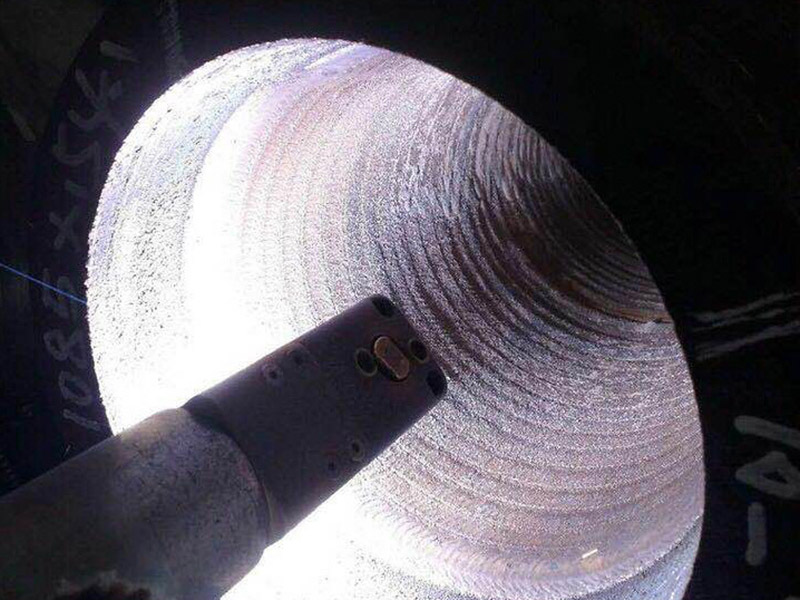
Weld overlay pipe with internal nickel-tungsten carbide layer for high wear protection
Key Characteristics of Cemented Carbide
1. Outstanding Hardness and Wear Resistance
Tungsten carbide ranks among the hardest engineering materials, second only to diamond. Its superior hardness and wear resistance ensure long-term durability in cutting tools, drilling inserts, and pipeline wear parts that operate under extreme friction and pressure.
FNS’s tungsten carbide-based components help reduce equipment downtime and maintenance costs by maintaining high performance even in severe working conditions.
2. High Compressive Strength
The high compressive strength of tungsten carbide enables it to endure massive loads without deformation. This makes it ideal for pipeline connectors, valve seats, and flow control components, where dimensional stability and reliability are vital.
3. Excellent Red Hardness
Even at temperatures reaching 800–1000°C, cemented carbide retains its cutting efficiency and hardness. This heat resistance—known as red hardness—is essential for high-speed machining, oil and gas drilling, and abrasion-intensive operations in pipeline maintenance.
4. Balanced Toughness
Unlike brittle ceramics, cemented carbide’s cobalt binder gives it moderate toughness, allowing it to resist vibration and shock loads during continuous service. This property makes it suitable for rotating equipment and heavy-duty pipeline systems operating under dynamic stress.
5. High Elastic Modulus and Dimensional Stability
Cemented carbide exhibits a high modulus of elasticity, which provides superior rigidity and shape stability under heavy mechanical stress. It ensures precision performance in wear-resistant components and sealing systems used across energy, chemical, and industrial fluid pipelines.
Limitations of Cemented Carbide
While cemented carbide offers excellent mechanical and thermal performance, it also presents certain design challenges:
1. Brittleness
Cemented carbide is tougher than ceramics but more brittle than steel. Excessive impact or bending may lead to cracking or chipping, requiring careful design and support in dynamic pipeline applications.
2. Difficult to Machine
Due to its extreme hardness, cemented carbide cannot be shaped with standard machining tools. Diamond grinding or EDM (electrical discharge machining) is required for precision finishing, increasing fabrication complexity.
3. Higher Material Cost
Cemented carbide relies on tungsten and cobalt, both of which are strategic metals with higher costs. However, when used properly, its extended lifespan and reliability significantly reduce total operating costs in high-wear industrial systems.
Applications in Industry and Pipeline Engineering
Cemented carbide plays a crucial role across industries requiring durability and precision.
At FNS Pipeline Technology Co., Ltd., we utilize tungsten carbide materials to enhance performance in:
- Wear-resistant pipeline parts such as nozzles, valve seats, and sleeves
- Cutting and drilling tools for oil and gas exploration
- Flow control and sealing components exposed to high pressure and temperature
- Machinery and tooling inserts for metal forming and material processing
By integrating cemented carbide components into our pipeline systems and custom-engineered products, FNS ensures exceptional abrasion resistance, dimensional stability, and service longevity.


