


Best Hardfacing Materials for Mining Tools: Complete Selection Guide
Choosing the best hardfacing materials for mining tools is one of the most critical decisions for improving equipment durability and reducing operational costs. At FNS Pipeline Technology Co., Ltd., we help mining and tunneling companies select and apply the right surface engineering technologies to extend tool life in extreme environments.
The right best hardfacing materials for mining tools depend on wear type, operating conditions, and cost targets. This guide explains everything engineers need to know—from material comparison to real-world applications.
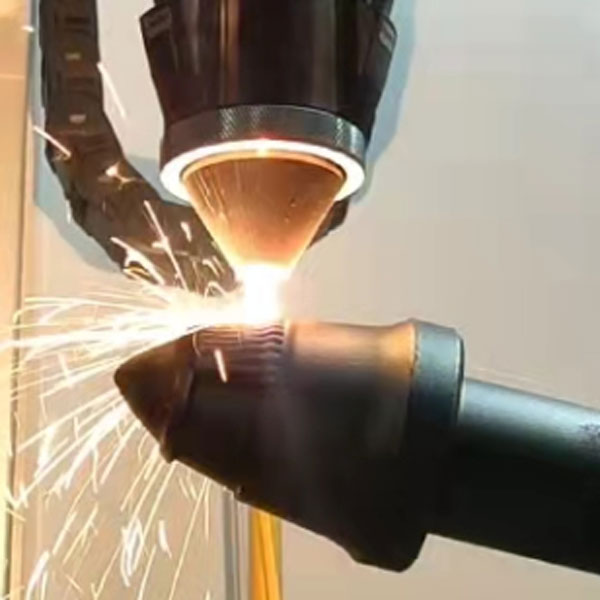
Laser cladding repair process for mining cutter pick surface strengthening
Why Hardfacing Is Essential for Mining Tools
Mining tools operate under extreme conditions:
- High abrasion from sand, rock, and minerals
- Continuous impact and vibration
- High temperature and corrosion exposure
Without proper protection, tools fail quickly. That’s why selecting the best hardfacing materials for mining tools is essential to:
- Extend service life
- Reduce downtime
- Lower total cost of ownership
Types of Wear in Mining Applications
Before choosing materials, understanding wear mechanisms is critical.
1. Abrasive Wear
Caused by hard particles (sand, quartz, ore)
2. Impact Wear
Repeated shock loads and collisions
3. Corrosive Wear
Chemical reactions with fluids or gases
4. Thermal Wear
High-temperature oxidation and fatigue
👉 Different wear types require different best hardfacing materials for mining tools
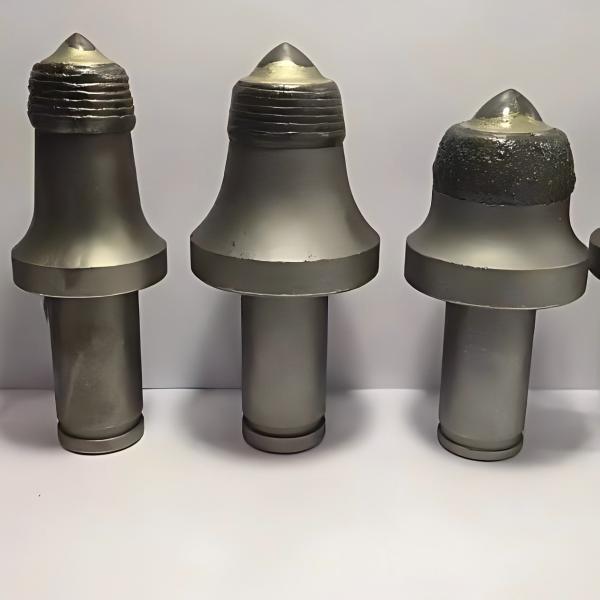
Wear resistant diamond hardfacing layer on cutting tools
Best Hardfacing Materials for Mining Tools (Detailed Comparison)
1. Diamond Hardfacing
Best for: Extreme abrasion
Advantages:
- Ultra-high hardness
- Longest wear life
- Excellent heat dissipation
Limitations:
- Higher cost
- Lower impact resistance
2. Tungsten Carbide (WC)
Best for: Mixed wear conditions
Advantages:
- High hardness + good toughness
- Cost-effective
- Widely used
Limitations:
- Lower hardness than diamond
3. Nickel-Based Alloys
Best for: Corrosion + moderate wear
Advantages:
- Excellent corrosion resistance
- Good high-temperature stability
4. Cobalt-Based Alloys (e.g., Stellite)
Best for: High temperature + corrosion
Advantages:
- Stable at high temperature
- Strong resistance to oxidation
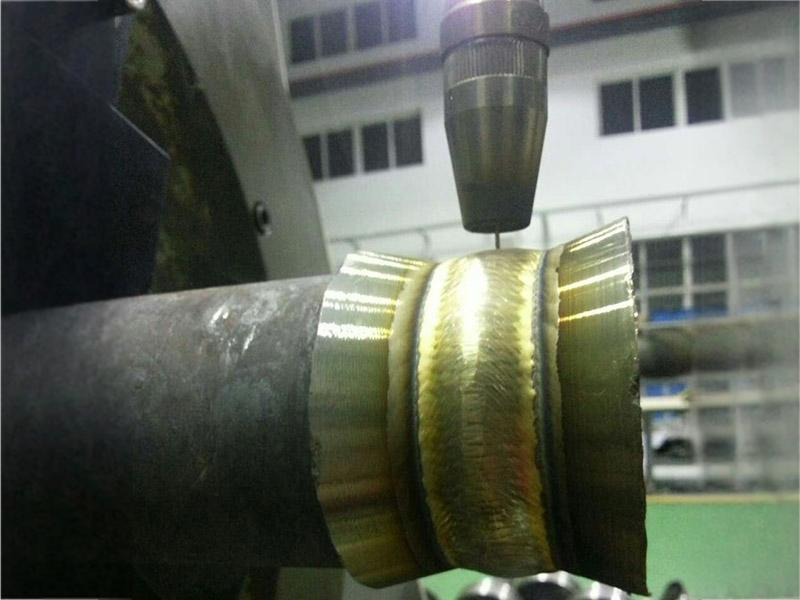
Copper-Based Cladding For Pipeline Prdouct
Quick Selection Table
| Working Condition | Best Material |
|---|---|
| Severe abrasion | Diamond |
| Abrasion + impact | Tungsten carbide |
| Corrosion | Nickel-based alloy |
| High temperature | Cobalt-based alloy |
Advanced Technologies That Improve Performance
Choosing materials alone is not enough—the process matters.
Plasma Cladding
Creates metallurgical bonding and high durability
Laser Cladding
Precise, low dilution, minimal deformation
TBM Tool Reinforcement
Specialized coatings for tunneling equipment
👉 TBM cutter tools cladding
FNS Case Study: Mining Tool Life Improvement
Client Industry: Coal mining
Problem: Rapid wear of cutting tools
Solution:
FNS applied optimized tungsten carbide + diamond hybrid hardfacing
Results:
- Tool life increased by 2–3×
- Maintenance frequency reduced
- Overall cost significantly lowered
Common Mistakes When Choosing Hardfacing Materials
- ❌ Choosing highest hardness without considering impact
- ❌ Ignoring operating environment
- ❌ Using generic coatings instead of customized solutions
- ❌ Focusing only on upfront cost
👉 The best approach is selecting best hardfacing materials for mining tools based on real conditions
FAQ
What is the best hardfacing material for mining tools?
The best hardfacing material depends on conditions, but tungsten carbide is the most versatile, while diamond is best for extreme abrasion.
Which hardfacing material lasts the longest?
Diamond coatings typically offer the longest lifespan in abrasive environments.
Is tungsten carbide better than other materials?
Tungsten carbide provides the best balance of hardness, toughness, and cost.
How do I choose the right hardfacing material?
You should evaluate wear type, impact level, temperature, and corrosion conditions.
What is the difference between cladding and coating?
Cladding creates a metallurgical bond, while coating may rely on mechanical adhesion.
Can hardfacing reduce costs?
Yes. Proper hardfacing can reduce total lifecycle costs by minimizing downtime and replacement frequency.
Are customized solutions available?
Yes. FNS provides tailored hardfacing solutions for different mining conditions.
👉 industrial wear resistant coating solutions


