


Chromium Carbide Hardfacing Wear Plate for Tunneling Equipment
Long-distance tunnel boring and underground excavation expose equipment to continuous contact with sand, gravel, rock and excavated soil. Chromium carbide hardfacing wear plate provides a targeted wear-protection solution for high-wear components such as shield machine cutterheads and screw conveyor flights.
FNS Pipeline Technology Co., Ltd. uses chromium carbide hardfacing technology to reinforce critical working surfaces, combining a hard wear-resistant layer with the toughness of the base material. This helps equipment withstand severe abrasion while maintaining structural integrity under impact and pressure.
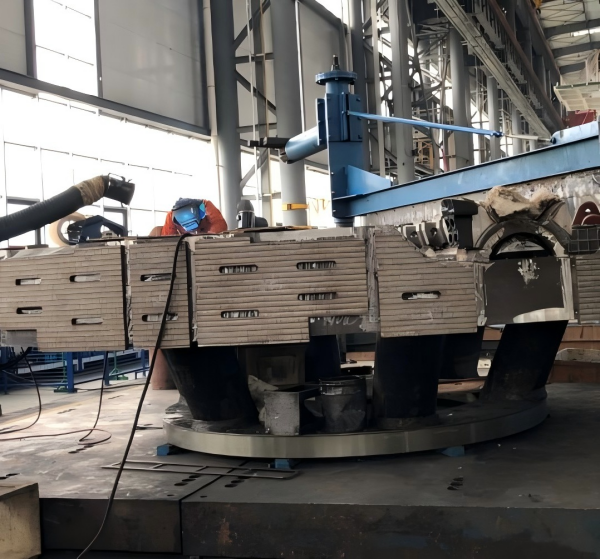
Chromium carbide hardfacing wear plate for shield machine cutterhead
1. Shield Machine Cutterhead
The cutterhead is the primary rock-breaking component of a shield machine. During operation, its surface can experience:
- Abrasion from sand, gravel and rock particles
- Repeated impact from hard rock
- Pressure from excavated material
- Groundwater, slurry and mud exposure
These conditions can rapidly wear conventional steel surfaces, particularly in areas with concentrated material contact.
Applying chromium carbide hardfacing wear plate or localized hardfacing protection to high-wear areas increases surface wear resistance while allowing the base material to retain its supporting toughness.
The metallurgically bonded wear layer is firmly integrated with the substrate, helping reduce the risk of premature peeling or separation during demanding operation.
Key benefits
- Improved resistance to abrasive wear
- Better protection against repeated impact
- Reduced local wear of the substrate
- Lower frequency of repair and replacement
- Extended service intervals for critical components
2. Shield Machine Screw Conveyor Flights
Screw conveyor flights continuously transport excavated soil, sand and rock away from the excavation chamber. Their working surfaces and outer edges are particularly vulnerable to abrasive wear.
Progressive wear can reduce flight thickness, deform the original profile and eventually affect conveying performance.
FNS can apply multi-layer chromium carbide hardfacing to high-wear areas of screw flights. The wear-resistant alloy layer is metallurgically bonded to the base material, providing strong adhesion and improved resistance to abrasive and extrusion wear.
At the same time, the substrate retains the toughness required to withstand mechanical loading during material transport.
Why Use Hardfacing Instead of Simply Increasing Steel Thickness?
For tunneling equipment, wear resistance is not determined by hardness alone.
A practical solution needs to balance:
| Factor | Importance |
| Abrasion resistance | Resists continuous contact with sand and rock |
| Impact resistance | Handles repeated contact with hard material |
| Metallurgical bonding | Helps maintain wear-layer integrity |
| Substrate toughness | Supports the component under mechanical loads |
| Wear-layer distribution | Protects areas where wear is concentrated |
This combination makes chromium carbide hardfacing wear plate suitable for applications where both severe abrasion and mechanical impact are present.
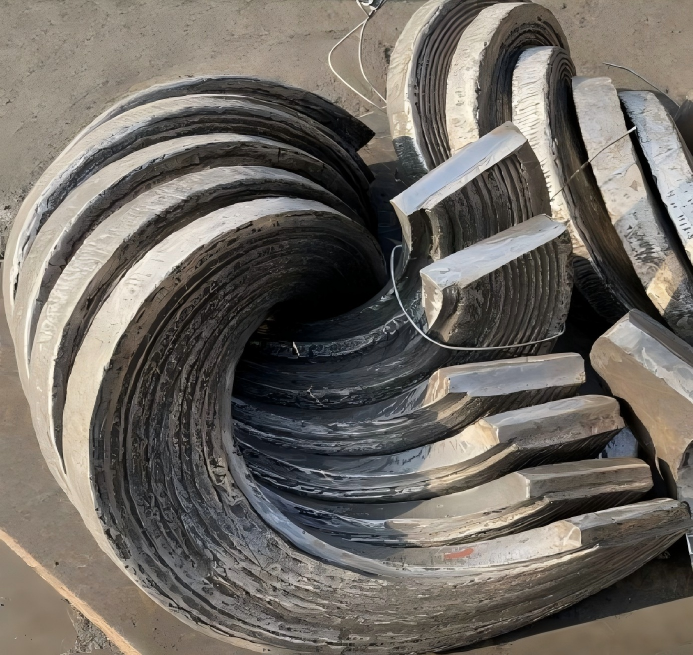
Chromium carbide hardfacing on screw conveyor flight
FNS Wear Protection for Tunneling Equipment
FNS focuses on applying hardfacing where wear actually occurs rather than using the same solution for every component.
Depending on the equipment and operating conditions, hardfacing can be considered for:
- Shield machine cutterheads
- Screw conveyor flights
- Transfer chutes
- Hoppers
- Excavation equipment
- Other components exposed to abrasive mineral materials
For existing equipment, localized hardfacing can also be considered as a repair or remanufacturing solution, potentially avoiding complete component replacement.
The appropriate alloy, hardfacing thickness and deposition method should be determined according to the base material, wear mechanism, impact conditions and component geometry.
Extend Equipment Life Through Targeted Surface Protection
In long-distance tunneling projects, frequent wear-related repairs can interrupt excavation and increase maintenance costs.
Instead of replacing an entire component after severe wear occurs, reinforcing critical surfaces in advance can provide a more targeted approach to wear management.
With chromium carbide hardfacing wear plate, FNS combines a wear-resistant alloy surface with a tough substrate to protect key tunneling components against abrasive service.
For cutterheads, the focus is on rock and mineral abrasion. For screw conveyor flights, the priority is maintaining the working surface and geometry during continuous material transport.
By combining a hard chromium carbide alloy layer with a metallurgically bonded substrate, FNS helps improve wear resistance while maintaining the structural toughness required for demanding tunneling conditions.
FNS — targeted hardfacing protection for longer-lasting tunneling equipment.
FAQ
What is chromium carbide hardfacing used for?
It is primarily used to improve the abrasion resistance of components exposed to severe wear from sand, gravel, rock and other abrasive materials.
Can FNS hardface shield machine cutterheads?
Yes. High-wear areas of shield machine cutterheads can be reinforced with localized chromium carbide hardfacing according to the component material and operating conditions.
Can screw conveyor flights be hardfaced?
Yes. FNS can apply multi-layer hardfacing to working surfaces and edges of screw conveyor flights where abrasive wear is concentrated.
Does hardfacing replace the base material?
No. The base material provides structural support and toughness, while the hardfacing layer provides enhanced surface wear resistance.
Can worn tunneling components be repaired?
Suitable components can be evaluated for localized hardfacing repair or remanufacturing, depending on the remaining substrate condition and component geometry.


