



CRA Cladding vs Internal Coating: Which Offers Better Pipeline Corrosion Protection?
When selecting a corrosion protection strategy for oil and gas pipelines, engineers often compare CRA cladding vs internal coating to determine the most reliable solution.
Both methods are designed to protect pipeline interiors from corrosion caused by water, chlorides, CO₂, H₂S, and aggressive chemical media. However, their performance, lifespan, and maintenance requirements differ significantly.
For critical applications where long-term reliability is essential, many operators are increasingly choosing CRA cladding vs internal coating because of its superior durability and resistance to coating failure.
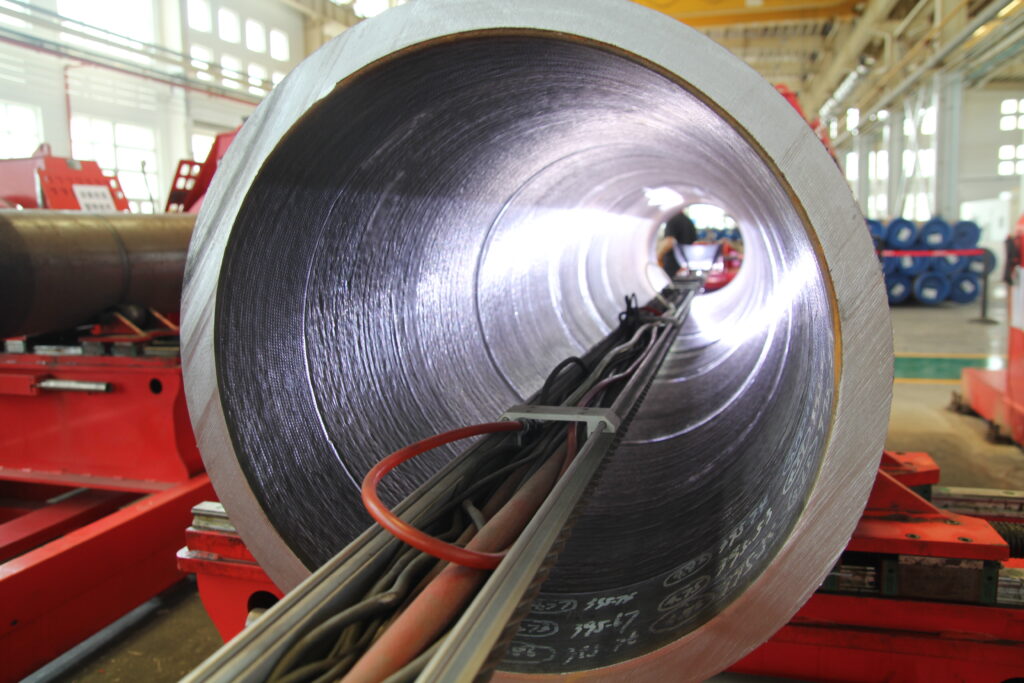
Overlay Cladding Pipes
What Is Internal Coating?
Internal coating is a non-metallic protective layer applied to the inside surface of a pipeline.
Common materials include:
- Epoxy coatings
- Fusion bonded epoxy (FBE)
- Phenolic coatings
- Polyurethane coatings
Benefits:
✔ Lower initial cost
✔ Fast application
✔ Smooth flow characteristics
Limitations:
✖ Risk of coating damage
✖ Limited high-temperature performance
✖ Difficult repair at field weld joints
✖ Potential delamination over time
What Is CRA Cladding?
Corrosion Resistant Alloy (CRA) cladding involves depositing a metallic alloy layer directly onto the steel substrate.
Common CRA materials include:
- 316L Stainless Steel
- Duplex 2205
- Super Duplex 2507
- Inconel 625
- Inconel 825
Unlike coatings, CRA overlays create a true metallurgical bond with the base metal.
This is why CRA cladding vs internal coating often becomes the preferred choice for high-value pipeline assets.
Performance Comparison
| Factor | Internal Coating | CRA Cladding |
| Corrosion Resistance | Good | Excellent |
| Mechanical Damage Resistance | Moderate | Outstanding |
| Temperature Resistance | Limited | Excellent |
| Weld Joint Protection | Difficult | Excellent |
| Service Life | Medium | Long-Term |
| Maintenance Cost | Higher | Lower |
| Initial Cost | Lower | Higher |
Why Oil & Gas Operators Prefer CRA Cladding
In modern pipeline projects, corrosion failures frequently occur at weld joints.
CRA overlays provide:
- Continuous protection
- Resistance to sour service
- Improved lifecycle economics
- Reduced shutdown risk
This is particularly important when implementing pipe end internal cladding technology.
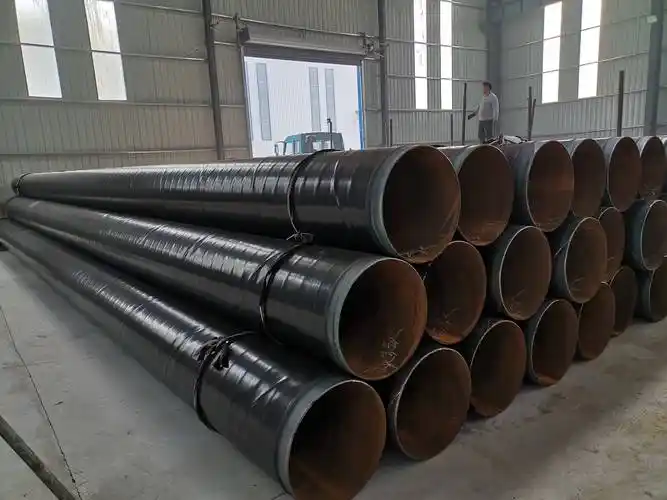
3PE anti-corrosion coating pipes
FNS Project Example
FNS Pipeline Technology Co., Ltd. completed a corrosion-resistant alloy cladding project for a crude oil transmission line.
The client experienced repeated corrosion near field welds despite using internal coatings.
After implementing Inconel 625 pipe-end overlays:
- Weld joint corrosion risk was eliminated
- Inspection frequency decreased
- Expected pipeline life increased significantly
Which Solution Should You Choose?
Choose Internal Coating When:
- Corrosion risk is low
- Budget is the primary concern
- Service life requirements are moderate
Choose CRA Cladding When:
- Pipeline failure is costly
- H₂S or CO₂ is present
- Long-term reliability is required
- Weld joint corrosion must be eliminated
Related Articles
→ Pipe End Internal Cladding Technology
→ Inconel 625 Pipe End Cladding for Sour Service Pipelines
→ How Internal Bore Cladding Extends the Life of Oil & Gas Transmission Pipelines
FAQ
Is CRA cladding better than internal coating?
For severe corrosion environments, CRA cladding typically provides significantly longer service life and better reliability.
Can CRA cladding replace internal coatings?
In many oil and gas applications, yes. CRA cladding offers superior corrosion protection and eliminates coating repair requirements.
Which is more economical over 20 years?
Although CRA cladding costs more initially, total lifecycle costs are often lower due to reduced maintenance and failures.


