



How Internal Bore Cladding Extends the Life of Oil & Gas Transmission Pipelines
Internal bore cladding is increasingly used to protect pipelines operating in harsh oil and gas environments.
Corrosion often begins on internal surfaces where aggressive media continuously contact the steel substrate.
By applying internal bore cladding, operators create a durable corrosion-resistant barrier that significantly increases pipeline reliability.
Common Causes of Internal Pipeline Failure
Pipeline degradation is often caused by:
- Water contamination
- Chlorides
- H₂S
- CO₂
- Abrasive solids
- Flow-induced erosion
These conditions gradually weaken pipeline walls.
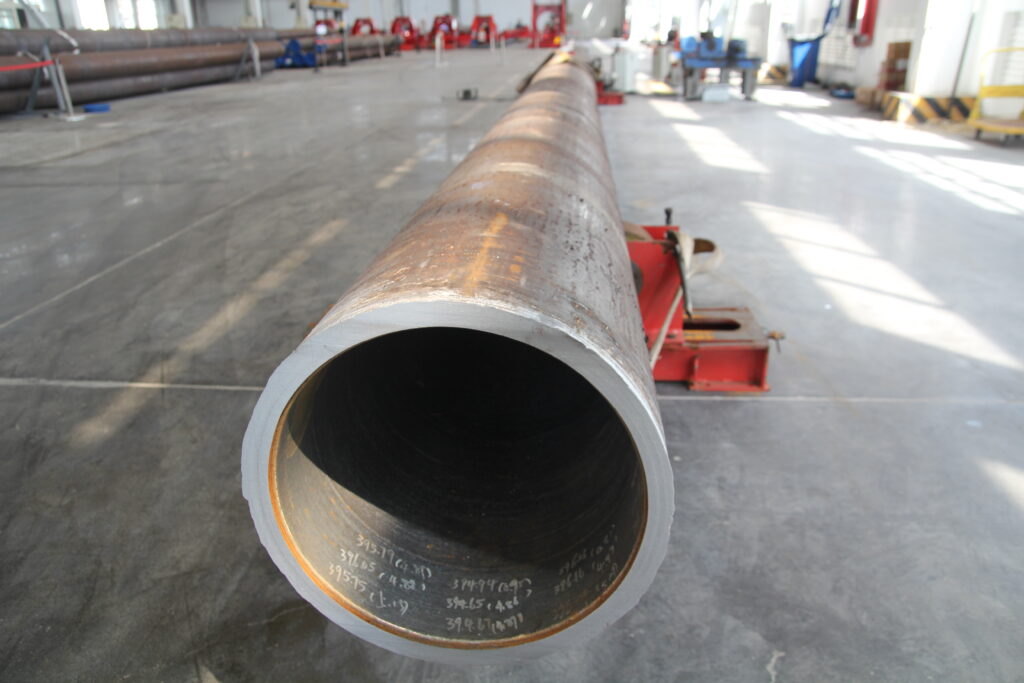
Internal bore cladding process for oil and gas transmission pipeline corrosion protection
How Internal Bore Cladding Works
The process involves depositing a corrosion-resistant alloy onto the internal surface.
Materials commonly used include:
- 316L
- Duplex 2205
- Super Duplex 2507
- Inconel 625
The overlay becomes metallurgically bonded to the pipe wall.
Advantages of Internal Bore Cladding
Superior Corrosion Protection
Protects against:
- Pitting
- Crevice corrosion
- Sour service attack
Reduced Maintenance
Less frequent inspections and repairs.
Longer Service Life
Pipeline lifespan can increase substantially.
Enhanced Reliability
Particularly important for offshore and remote installations.
FNS Internal Cladding Project
FNS Pipeline Technology Co., Ltd. completed an internal bore cladding project for a produced water pipeline system.
Benefits achieved:
- Improved corrosion resistance
- Lower maintenance costs
- Increased operational uptime
Internal Bore Cladding vs Internal Coating
Internal bore cladding offers:
- Metallurgical bonding
- Greater durability
- Higher temperature resistance
- Longer service life
Compared with coatings, it is often preferred for demanding service environments.
Related Articles
→ Pipe End Internal Cladding Technology
→ CRA Cladding vs Internal Coating
→ Inconel 625 Pipe End Cladding for Sour Service Pipelines
FAQ
What is internal bore cladding?
A process that applies a corrosion-resistant alloy layer to the internal surface of a pipe.
How long does internal bore cladding last?
Service life depends on operating conditions but is generally much longer than conventional coatings.
Which industries use internal bore cladding?
Oil & gas, petrochemical, offshore, chemical processing, and power generation industries.


