



Pipe End Internal Cladding Technology: A Long-Term Corrosion Protection Solution for Pipeline Weld Joints
Pipe end internal cladding technology has become one of the most effective solutions for protecting critical weld areas in oil, gas, water, and chemical transmission pipelines.
Although welding remains the most common method for connecting long-distance pipelines, the weld joint area has traditionally been the weakest point in terms of corrosion resistance. During pipeline construction, internal coatings are often interrupted at field weld locations, creating unprotected zones where corrosion can initiate.
In aggressive service environments containing:
- Chlorides
- Hydrogen sulfide (H₂S)
- Carbon dioxide (CO₂)
- High-viscosity crude oil
- Produced water
- Chemical media
the internal weld area may experience accelerated corrosion, reducing pipeline reliability and increasing maintenance costs.
To solve this challenge, the industry has increasingly adopted pipe end internal cladding technology, which creates a corrosion-resistant alloy barrier before pipeline installation.
What Is Pipe End Internal Cladding Technology?
Pipe end internal cladding technology is a manufacturing process in which a corrosion-resistant alloy (CRA) is deposited onto the internal surface of both pipe ends before coating and pipeline installation.
The process typically involves:
- Internal alloy cladding at the pipe ends
- Internal and external anti-corrosion coating application
- Field welding of pipe sections
- Formation of a continuous corrosion-resistant zone across the weld area
After welding, the weld joint is protected by the pre-installed CRA overlay, eliminating the need for internal weld repair coating or internal field touch-up operations.
This approach is commonly known as:
- Internal weld overlay cladding
- No field joint coating technology
- Corrosion resistant alloy pipe end cladding
- Weld-free internal corrosion protection system
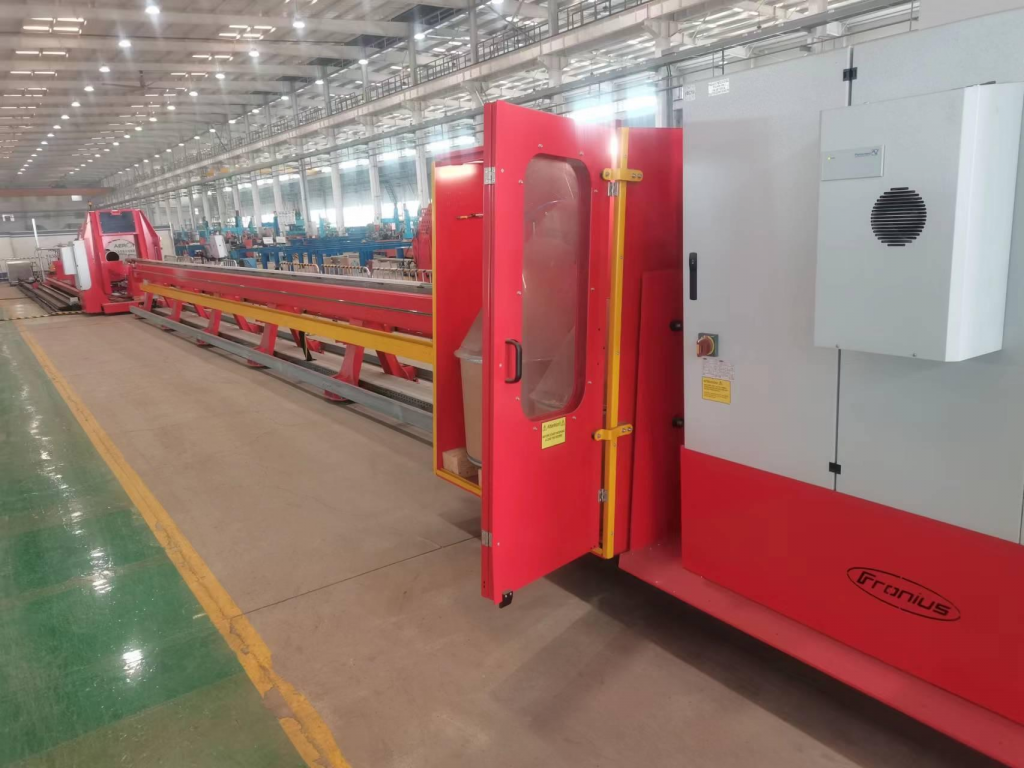
Automated clad pipe production for oil & gas applications
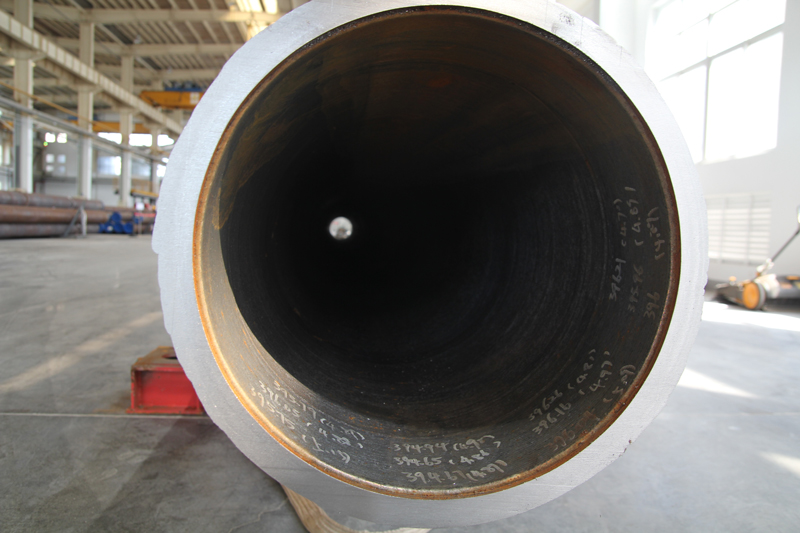
Pipe end internal cladding technology with corrosion resistant alloy overlay on steel pipe internal weld area
How the Technology Eliminates Internal Corrosion Weak Points
Traditional pipelines often suffer from a discontinuity in internal corrosion protection at field welds.
Conventional Approach
Internal coating → Field welding → Internal coating repair
Challenges include:
- Difficult access
- Inconsistent coating quality
- Long construction time
- High labor costs
- Corrosion risk at repaired areas
Pipe End Internal Cladding Approach
Internal CRA cladding → Pipeline welding → No internal repair required
Benefits include:
✔ Continuous corrosion protection
✔ No internal coating interruption
✔ Reduced field construction complexity
✔ Improved long-term reliability
✔ Lower lifecycle cost
By implementing pipe end internal cladding technology, operators can effectively remove one of the most common corrosion initiation points in long-distance pipeline systems.
Double-Tungsten Automatic Internal Cladding Process
At FNS Pipeline Technology Co., Ltd., advanced automatic cladding systems are used to ensure consistent overlay quality.
The process typically employs:
Dual-Torch Automatic Internal Cladding
Features include:
- Twin tungsten electrode technology
- Stable arc characteristics
- Uniform alloy deposition
- High productivity
- Reduced dilution rates
Common Cladding Materials
Depending on service conditions, the following materials may be applied:
| Cladding Material | Typical Application |
| 316L Stainless Steel | General corrosion resistance |
| 2205 Duplex Stainless Steel | Chloride environments |
| Inconel 625 | Severe corrosion and offshore service |
| Inconel 825 | Acidic media |
| Alloy 625 Overlay | High H₂S and CO₂ content pipelines |
The resulting overlay provides exceptional resistance against localized corrosion, pitting, crevice corrosion, and sulfide stress cracking.
Key Advantages of Pipe End Internal Cladding Technology
1. Eliminates Internal Field Joint Coating
The most obvious benefit of pipe end internal cladding technology is the complete removal of internal weld coating repair operations.
This significantly simplifies pipeline construction.
2. Enhanced Corrosion Resistance
The CRA layer protects the weld area from:
- Sour service environments
- High chloride concentrations
- Produced water corrosion
- Acidic media attack
3. Reduced Maintenance Costs
With fewer corrosion-related failures:
- Inspection frequency decreases
- Repair costs are reduced
- Unplanned shutdowns become less likely
4. Improved Construction Efficiency
Contractors can:
- Shorten project schedules
- Reduce labor requirements
- Minimize specialized internal coating operations
5. Extended Pipeline Service Life
Operators benefit from:
- Longer asset lifespan
- Improved operational reliability
- Lower total cost of ownership
FNS Project Case: Internal CRA Cladding for Sour Crude Oil Pipeline
FNS Pipeline Technology Co., Ltd. recently supported a pipeline project involving the transportation of high-sulfur crude oil.
Project Challenges
- Elevated H₂S concentration
- High chloride content
- Long-distance transmission requirements
- Strict corrosion control standards
FNS Solution
- Automatic internal pipe end cladding
- Inconel 625 alloy overlay
- Precision control of overlay thickness
- 100% quality inspection
Results
- Continuous internal corrosion protection
- Elimination of internal field weld coating repairs
- Improved construction efficiency
- Enhanced long-term corrosion resistance
The project demonstrated the practical value of pipe end internal cladding technology in demanding oil and gas applications.
Industries Benefiting from Internal Weld Overlay Cladding
The technology has been successfully applied in:
Oil & Gas Pipelines
- Crude oil transportation
- Natural gas pipelines
- Gathering systems
- Offshore pipelines
Chemical Processing
- Acid transfer lines
- Chemical feed systems
- Corrosive media transportation
Water Injection Systems
- Produced water pipelines
- Seawater injection systems
- Industrial water transport
Energy Infrastructure
- Refinery piping
- Petrochemical plants
- LNG facilities
Why Choose FNS Pipeline Technology Co., Ltd.?
FNS Pipeline Technology Co., Ltd. provides complete cladding and remanufacturing solutions for industrial components and pipeline systems.
Our advantages include:
- Advanced automatic cladding equipment
- Internal diameter cladding expertise
- Corrosion-resistant alloy overlay capabilities
- Customized engineering solutions
- Strict quality control procedures
- Support for large-scale pipeline projects
From internal bore cladding to pipe end corrosion-resistant overlays, FNS helps customers improve reliability while reducing lifecycle costs.
Frequently Asked Questions
What is pipe end internal cladding technology?
It is a process that deposits a corrosion-resistant alloy onto the inner surface of pipe ends before welding, eliminating the need for internal weld coating repairs after installation.
Why are pipeline weld joints prone to corrosion?
Traditional internal coatings are interrupted at weld locations, leaving exposed areas that can become corrosion initiation points.
Which alloys are commonly used for internal cladding?
Common materials include 316L stainless steel, Duplex 2205, Inconel 625, Inconel 825, and other corrosion-resistant alloys.
Is pipe end internal cladding suitable for sour service pipelines?
Yes. Alloy 625 and other nickel-based alloys are widely used in H₂S-containing environments and can significantly improve corrosion resistance.
Can internal cladding replace post-weld internal coating repairs?
Yes. One of the primary advantages of pipe end internal cladding technology is eliminating the need for internal field joint coating repair.
How long can CRA-clad pipe ends extend pipeline service life?
Service life depends on operating conditions, but properly designed CRA overlays can significantly increase corrosion resistance and extend pipeline operating life by many years.


