



Plasma Arc Welding (PAW): Advanced Welding Solutions Beyond TIG
Plasma Arc Welding (PAW) is an advanced welding process developed from conventional TIG (GTAW) welding. In practice, almost any joint that can be welded using TIG can also be completed with plasma arc welding. However, due to its higher equipment cost and more complex process control—especially for keyhole plasma welding—the choice between PAW and TIG must be based on specific welding requirements.
At FNS Pipeline Technology Co., Ltd., plasma arc welding is applied where higher penetration, superior weld consistency, and productivity gains justify the process, particularly in precision and pipeline-related applications.
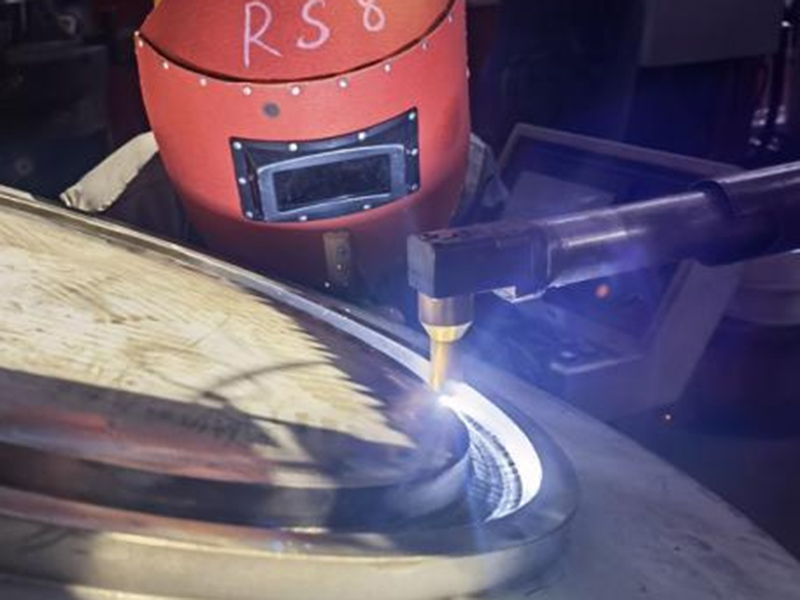
Plasma arc welding process applied to precision metal components at FNS Pipeline Technology Co., Ltd.
Manual and Automatic PAW Modes
Similar to TIG welding, PAW can be performed in manual or automatic modes. However, different PAW methods require different levels of automation:
- Keyhole plasma arc welding must be fully automated due to its strict process control requirements
- Melt-in (non-keyhole) plasma welding can be performed either manually or automatically
For manual melt-in plasma arc welding, the optimal current range is 0.1–50 A. When the current exceeds 50 A, conventional TIG welding is usually more economical.
Micro Plasma Welding and Arc Stability Advantages
Micro plasma welding systems use a combined arc system, consisting of a pilot arc and a main arc. During intermittent welding—such as multiple short welds or spot welds—the operator can extinguish only the main arc while maintaining the pilot arc. This allows rapid and reliable arc re-ignition without repeated high-frequency starts, which is common in TIG welding.
Another key advantage is arc length tolerance. PAW can tolerate arc length variations of ±1 mm without affecting weld quality. This makes manual PAW especially suitable for applications requiring frequent arc starts and where precise arc length control is difficult, such as wire mesh welding or thin, irregular components.
Applications in Precision and Thin-Wall Components
Automatic melt-in plasma arc welding is widely used in the production of small, high-precision components, including:
- Medical device parts
- Optical instrument components
- Precision mechanical assemblies
- Diaphragms and metal bellows
Compared to TIG welding, which is generally limited to materials thicker than 0.2 mm, PAW offers significant advantages when welding ultra-thin or delicate circular seams, where arc starting and stopping are much more challenging with TIG.
Advantages for Thick Plate and High-Temperature Materials
When plasma arc welding is used to replace TIG welding on thicker materials, it can either increase welding speed or reduce the number of welding passes.
- Keyhole plasma arc welding can achieve full penetration in a single pass for materials 1.6–8 mm thick
- TIG welding typically requires multi-pass welding when material thickness exceeds 3 mm
Due to its high arc temperature and concentrated energy, plasma arc welding performs exceptionally well on high-melting-point and heat-resistant alloys. The molten metal flows smoothly, producing clean, well-shaped welds. In contrast, TIG welding often results in sluggish molten metal flow, slower travel speeds, and less visually refined weld surfaces.
Single-Sided Welding with Back Bead Formation
PAW is characterized by high arc rigidity, strong penetration, and concentrated heat input, making it one of the easiest arc welding methods for achieving single-sided welding with double-sided formation.
Compared with TIG welding, melt-in PAW offers:
- A higher depth-to-width ratio
- A narrower heat-affected zone (HAZ)
- Improved molten pool support along the weld edges
Keyhole PAW inherently produces back bead formation from a single-sided operation, making it ideal for high-quality root passes in pipeline and pressure-containing components.
Why FNS Pipeline Technology Uses PAW
At FNS Pipeline Technology Co., Ltd., PAW is selected for applications that demand precision, penetration control, and consistent weld quality, particularly in pipeline systems, pressure components, and high-performance industrial assemblies. By combining advanced welding equipment with process expertise, FNS delivers reliable welding solutions that meet strict international standards.


