



Stainless Steel Overlay Welding on Carbon and Low-Alloy Steels: Dilution Control and Material Selection
In industrial manufacturing and maintenance, stainless steel overlay welding on carbon steel and low-alloy steel is widely used to improve corrosion resistance, wear resistance, and service life. At FNS Pipeline Technology Co., Ltd., we apply different overlay welding methods based on service conditions, base material properties, and performance requirements.
Common stainless steel overlay welding methods include Shielded Metal Arc Welding (SMAW), Gas Metal Arc Welding (GMAW), strip submerged arc welding (or electroslag overlay welding), and wire submerged arc overlay welding. Regardless of the process used, the first overlay layer plays a decisive role in determining final performance.
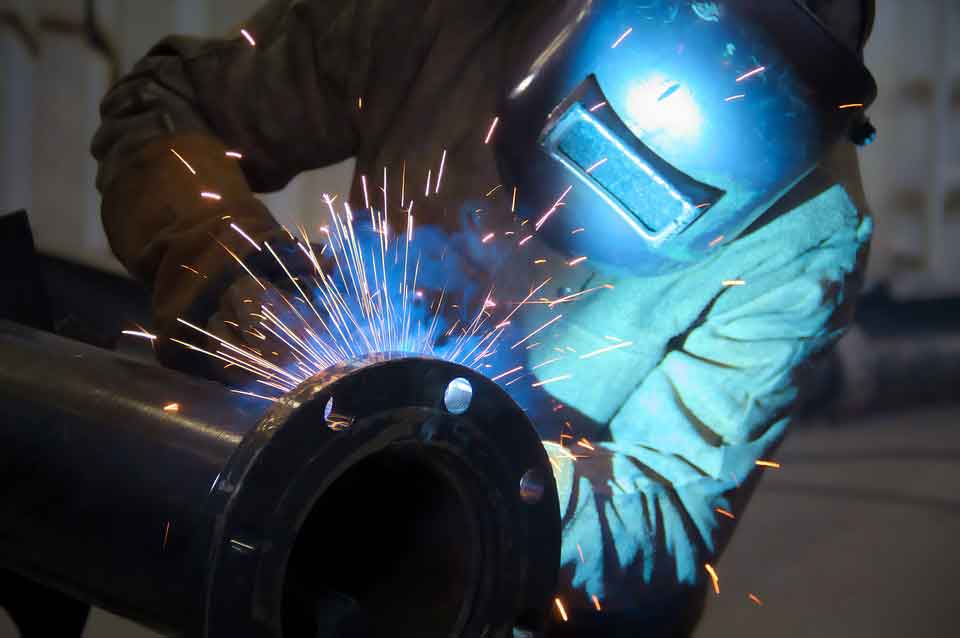
Stainless steel overlay welding on carbon steel components at FNS Pipeline Technology Co., Ltd
Dilution Effect in the First Overlay Layer
The weld metal in the first overlay layer is always formed by a mixture of deposited filler metal and molten base metal. Because carbon steel and low-alloy steel contain very limited alloying elements, the base metal significantly dilutes the chemical composition of the stainless steel overlay.
This dilution may reduce the content of austenite- and ferrite-forming elements in the weld metal, leading to the formation of excessive martensite. As a result, the overlay may suffer from:
- Increased cracking tendency
- Reduced toughness
- Lower corrosion resistance
Therefore, understanding and controlling dilution is essential for reliable stainless steel overlay welding.
Dilution Rate and Its Influence on Weld Microstructure
The final chemical composition and microstructure of the overlay weld metal depend on two factors:
- The filler material composition
- The amount of base metal melted into the weld pool, commonly referred to as the dilution rate
Dilution rate is defined as the proportion of base metal in the total weld metal. Once a welding process is selected, the adjustable range of dilution is limited. Excessive attempts to alter it may complicate production and reduce process stability. For this reason, proper filler material selection becomes critical.
Example: Manual Shielded Metal Arc Welding (SMAW)
In manual SMAW overlay welding, the typical dilution rate is around 20%.
- If an 18-8 (Cr18%–Ni8%) stainless steel electrode is used, dilution from carbon steel can reduce the weld metal composition to approximately 15-7, resulting in an austenite + martensite structure.
- If dilution increases further during actual operation, a large amount of brittle martensite may form, significantly degrading mechanical properties, corrosion resistance, and crack resistance.
Additionally, reduced nickel content near the fusion line leads to a wide martensitic transition zone, which further compromises reliability.
Why 309 Stainless Steel Is Preferred for the First Layer
Under the same welding conditions, using a 309 stainless steel overlay material produces much better results. After dilution, the weld metal composition remains close to 19-9 or 18-8, which already meets the chemical requirements of the overlay.
The resulting austenite + ferrite microstructure provides:
- Improved resistance to hot cracking
- Better corrosion performance
- Higher structural stability in the first overlay layer
For this reason, 309 stainless steel is commonly recommended by FNS Pipeline Technology Co., Ltd. for the first layer when overlay welding stainless steel onto carbon or low-alloy steels.
Low-Dilution Overlay Welding Technologies
With the advancement of welding technology, low-dilution overlay welding processes are now widely used in demanding applications. One of the most effective methods is strip electroslag overlay welding, which can reduce dilution to below 10%.
Lower dilution allows the use of filler materials with slightly reduced alloy content while still achieving the desired overlay composition. This approach improves cost efficiency without sacrificing performance.
Engineering Considerations at FNS Pipeline Technology
At FNS Pipeline Technology Co., Ltd., we evaluate overlay welding solutions by considering:
- Welding process and achievable dilution rate
- Service environment and corrosion requirements
- Compatibility between base material and filler metal
- Long-term reliability and maintenance costs
By balancing process selection and filler material design, FNS delivers stainless steel overlay welding solutions that meet international standards and perform reliably in pipeline, pressure vessel, and industrial equipment applications.


