



Plasma Cladding for Automotive High-Temperature Alloy Components: A Proven Solution for Extreme Wear & Heat Resistance
Plasma cladding for automotive high-temperature alloy components is rapidly becoming the preferred surface engineering solution for critical automotive parts operating under extreme thermal and mechanical stress.
Modern automotive systems-especially engines, braking systems, and drivetrain components—must withstand:
- Continuous high-temperature exposure
- Corrosive combustion by-products
- Repeated mechanical impact and friction
At FNS Pipeline Technology Co., Ltd., we apply advanced plasma cladding for automotive high-temperature alloy components to significantly enhance durability, reduce failure rates, and lower lifecycle costs.
What Makes Plasma Cladding the Best Choice?
Unlike traditional coating or repair methods, plasma cladding for automotive high-temperature alloy components creates a true metallurgical bond between the coating and substrate.
Key Technical Advantages
- High bonding strength (metallurgical fusion, not mechanical adhesion)
- Low dilution rate for stable alloy composition
- Dense, defect-free coating (no porosity, cracks, or inclusions)
- Uniform hardness distribution
- Minimal heat-affected zone
These features position plasma cladding technology as a superior alternative to thermal spraying, electroplating, and conventional welding.
Core Automotive Applications
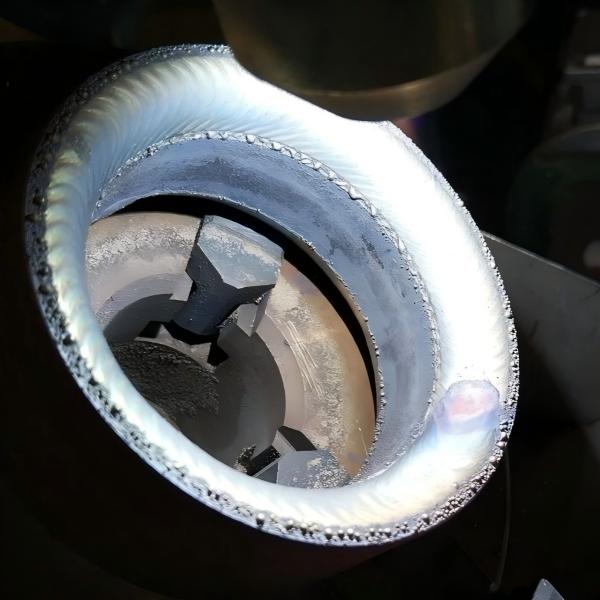
Plasma cladding for automotive high temperature alloy valve surface
1. Engine Valve Seat Surface Enhancement
Valve seats operate in one of the harshest environments inside an engine. By using plasma cladding for automotive high-temperature alloy components, high-performance cobalt-based alloys are deposited precisely on sealing surfaces.
Performance Improvements:
- 2–3× longer service life
- Excellent resistance to oxidation and corrosion
- Stable sealing under high pressure and temperature
- Smooth, defect-free surface
👉 Learn more about plasma cladding technology for precision sealing applications.
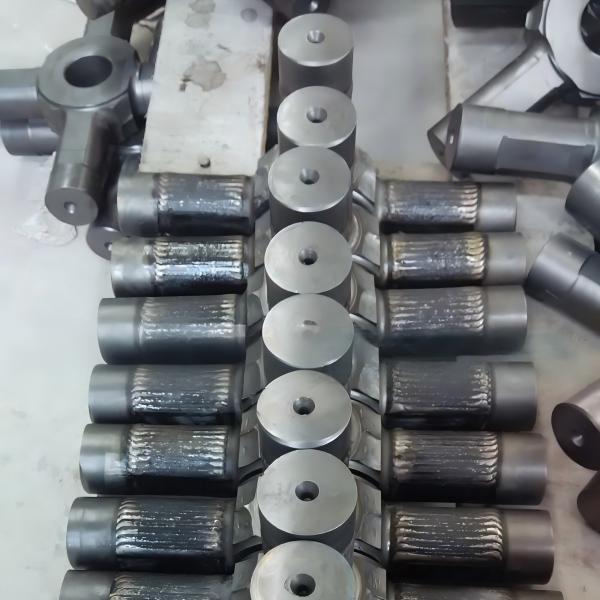
Plasma powder cladding on large industrial component surfac
2. Universal Joint Cross Shaft Repair & Reinforcement
Wear and deformation in cross shafts can lead to:
- Misalignment
- Vibration and noise
- Reduced transmission efficiency
With plasma cladding for automotive high-temperature alloy components, worn journals and bearing seats can be rebuilt with high-strength alloy layers.
Results:
- Restored geometry and alignment
- Improved fatigue resistance
- Extended operational lifespan
- Reduced replacement frequency
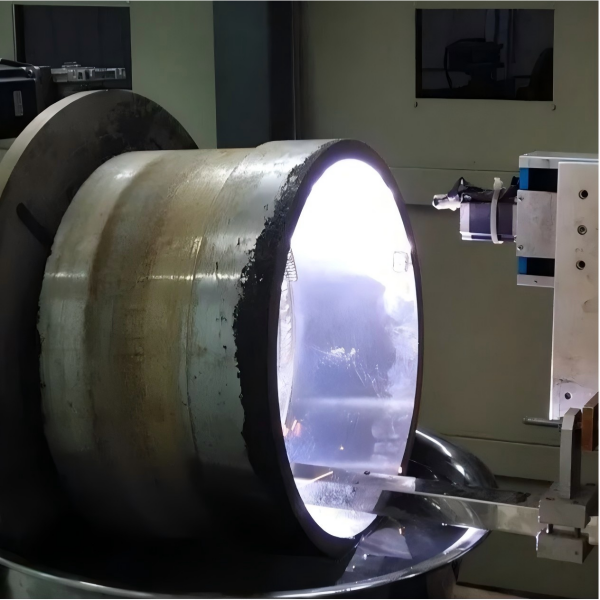
Brake drum inner surface high temperature alloy plasma coating
3. Brake Drum Inner Surface Protection
Heavy-duty brake drums experience extreme thermal cycling. Applying plasma cladding for automotive high-temperature alloy components ensures long-term performance under these conditions.
Key Benefits:
- Superior high-temperature wear resistance
- Reduced thermal cracking risk
- Improved braking reliability
- Lower maintenance costs
👉 Explore related Plasma Cladding Remanufacturing for Industrial Equipment
Process Overview: How FNS Delivers Consistent Results
At FNS, plasma cladding for automotive high-temperature alloy components is executed through a controlled and repeatable process:
- Surface Preparation
Cleaning, machining, and preheating to ensure optimal bonding - Powder Selection
Custom alloy design (Co-based, Ni-based, Fe-based) based on application - Plasma Cladding Deposition
High-energy plasma arc melts powder and substrate simultaneously - Post-Treatment
Grinding, finishing, and inspection for dimensional accuracy
FNS Project Case: Automotive Component Remanufacturing
Project: Diesel Engine Valve & Cross Shaft Repair
Solution: Plasma cladding with cobalt-based alloy
Results:
- Service life increased by over 200%
- Rejection rate reduced significantly
- Maintenance costs decreased by 30%+
- Production downtime minimized
This project highlights how plasma cladding for automotive high-temperature alloy components delivers measurable ROI for manufacturers.
Plasma vs Laser Cladding: Which is Better?
Both technologies are widely used, but their applications differ.
| Feature | Plasma Cladding | Laser Cladding |
|---|---|---|
| Cost | Lower | Higher |
| Efficiency | High | Moderate |
| Automation | Excellent | Excellent |
| Precision | High | Very high |
👉 For high-precision needs, explore Plasma Cladding Repair for Mining Conveyor Middle Troughs and Scraper Systems
Why FNS Pipeline Technology?
Choosing the right partner is as important as choosing the right process.
FNS offers:
- Turnkey plasma cladding systems
- Custom alloy powder solutions
- Automated and robotic integration
- Stable, scalable production capability
- Proven global project experience
We help clients implement plasma cladding for automotive high-temperature alloy components with consistent quality and fast ROI.
FAQ
What is plasma cladding for automotive high-temperature alloy components?
It is a surface enhancement process that uses a plasma arc to deposit alloy coatings, improving wear, heat, and corrosion resistance.
Which automotive parts benefit most?
- Engine valves
- Brake drums
- Universal joint cross shafts
- High-load rotating components
How much longer do parts last after cladding?
Typically 2–3 times longer, depending on working conditions.
Is plasma cladding cost-effective?
Yes. It reduces replacement costs, downtime, and material waste, making it highly economical.
Can plasma cladding be automated?
Absolutely. FNS systems support full automation and robotic integration for mass production.
Looking to improve the durability and performance of your automotive components?
Contact FNS Pipeline Technology Co., Ltd. today to get a customized plasma cladding for automotive high-temperature alloy components solution tailored to your application.


