



Plasma Cladding Process vs Traditional Hardfacing: Which Repair Method Delivers Better Performance?
When engineers evaluate the plasma cladding process vs traditional hardfacing, the decision affects much more than the repair itself. It influences equipment reliability, maintenance intervals, operating costs, and the overall service life of critical components. While both technologies restore worn parts through the deposition of wear-resistant alloys, the plasma cladding process vs traditional hardfacing differs significantly in heat input, dilution rate, coating quality, dimensional accuracy, and automation capability.
At FNS Pipeline Technology Co., Ltd., we help manufacturers select the right repair solution based on operating conditions, component geometry, and expected service life. Whether restoring mining equipment, oil & gas valves, hydraulic cylinders, pipeline components, or extrusion screws, understanding the strengths and limitations of each process ensures the best long-term return on investment.
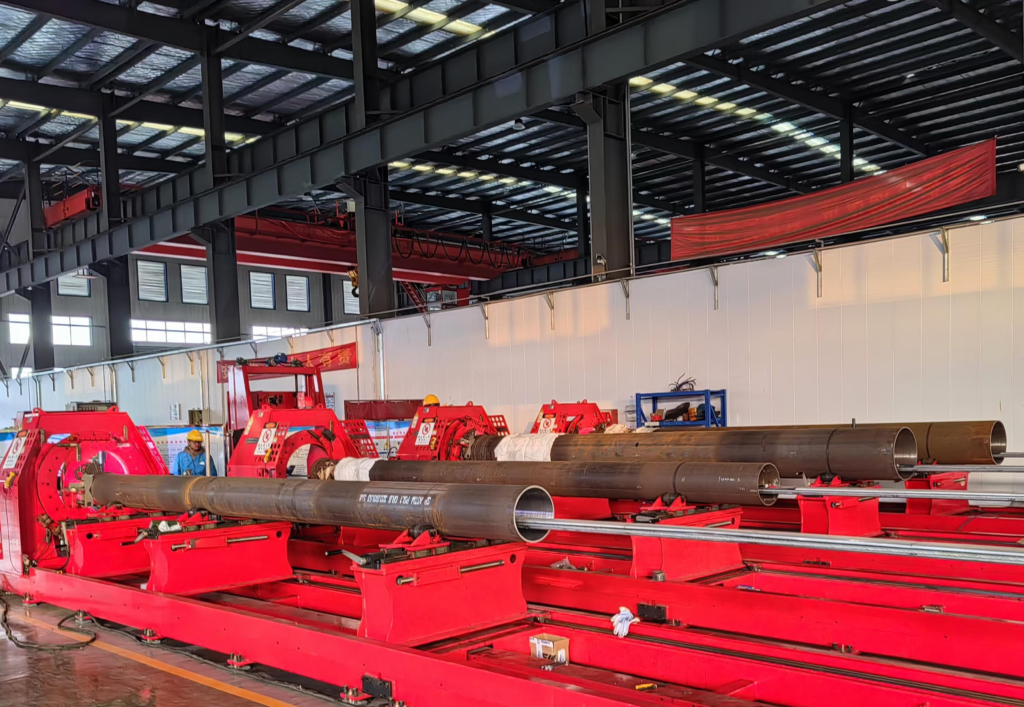
Manufacturing CRA Clad and Lined Pipes Under API 5LD
What Is Plasma Cladding?
Plasma cladding, also known as Plasma Transferred Arc (PTA) cladding, is an advanced surface engineering technology that uses a highly concentrated plasma arc to melt both the alloy powder and a thin layer of the base material simultaneously.
This creates a true metallurgical bond with minimal dilution between the coating and the substrate.
Compared with conventional welding methods, plasma cladding offers:
- Low heat input
- Excellent dimensional accuracy
- Uniform coating thickness
- Dense microstructure
- Minimal distortion
- Superior wear resistance
- Excellent corrosion resistance
Because of these advantages, plasma cladding has become one of the preferred technologies for high-value industrial components.
What Is Traditional Hardfacing?
Traditional hardfacing is a welding process that deposits wear-resistant filler materials onto a component using conventional welding techniques such as:
- Shielded Metal Arc Welding (SMAW)
- Gas Metal Arc Welding (GMAW/MIG)
- Gas Tungsten Arc Welding (GTAW/TIG)
- Flux-Cored Arc Welding (FCAW)
Traditional hardfacing is widely used because the equipment is relatively inexpensive and suitable for repairing large steel structures.
However, higher heat input often results in:
- Higher dilution
- Larger heat-affected zones
- Greater distortion
- More post-machining
- Lower coating consistency
Plasma Cladding vs Traditional Hardfacing: Key Differences
| Feature | Plasma Cladding | Traditional Hardfacing |
| Heat Input | Low | Medium to High |
| Dilution Rate | 3–8% | 15–30% |
| Metallurgical Bond | Excellent | Good |
| Surface Finish | Smooth | Rough |
| Distortion | Minimal | Higher |
| Automation | Fully Automated | Manual or Semi-Automatic |
| Coating Uniformity | Excellent | Depends on Operator |
| Material Utilization | High | Moderate |
| Machining Allowance | Small | Larger |
| Precision Components | Excellent | Limited |
Quick Take: If precision, consistency, and long service life are priorities, plasma cladding generally offers superior performance.
Why Dilution Rate Matters
Dilution refers to the percentage of base metal mixed into the deposited alloy during welding.
Lower dilution preserves the designed chemical composition of the wear-resistant alloy.
Plasma Cladding
- Typical dilution: 3–8%
- Better hardness retention
- More stable corrosion resistance
Traditional Hardfacing
- Typical dilution: 15–30%
- Alloy composition changes more significantly
- Reduced wear performance in demanding environments
For industries requiring reliable surface properties, such as oil & gas and mining, controlling dilution is essential.
Heat Input and Component Distortion
Heat affects not only the coating but also the base component.
Traditional hardfacing generates a larger heat-affected zone, which may lead to:
- Warping
- Residual stress
- Cracking risks
- Additional machining
Plasma cladding concentrates energy into a smaller area, reducing thermal deformation and making it suitable for precision components such as valve seats, bearing housings, and hydraulic cylinders.
Coating Quality and Service Life
A high-quality cladding layer should provide:
- Uniform hardness
- Dense microstructure
- Minimal porosity
- Strong metallurgical bonding
- Excellent wear resistance
Because plasma cladding produces finer grains and lower dilution, it often delivers longer service life than traditional hardfacing in abrasive or corrosive environments.
Typical Industrial Applications
Plasma Cladding
Recommended for:
- Valve sealing surfaces
- Hydraulic cylinders
- Bearing housings
- Extruder screws
- Internal bore cladding
- Pump sleeves
- Turbine components
- Pipeline CRA cladding
Traditional Hardfacing
Commonly used for:
- Crusher hammers
- Excavator buckets
- Conveyor components
- Structural wear plates
- Agricultural machinery
- Large fabrication repairs
Cost Comparison: Initial Cost vs Lifecycle Cost
Many companies focus only on the initial repair cost. However, the true cost includes maintenance, downtime, and replacement frequency.
| Cost Factor | Plasma Cladding | Traditional Hardfacing |
| Initial Equipment Investment | Higher | Lower |
| Repair Precision | Higher | Moderate |
| Post-Machining | Less | More |
| Downtime | Shorter | Longer |
| Service Life | Longer | Shorter |
| Lifecycle Cost | Lower | Higher |
For mission-critical equipment, plasma cladding often provides a lower total cost of ownership despite the higher initial investment.
FNS Engineering Case Study
Restoring Hydraulic Cylinder Rods for Mining Equipment
A mining customer experienced severe wear on hydraulic cylinder rods operating in abrasive underground conditions. Frequent repairs using conventional hardfacing resulted in inconsistent coating quality and recurring failures.
FNS Solution
The engineering team recommended plasma cladding with a nickel-based wear-resistant alloy.
The repair process included:
- Surface inspection and preparation
- Automated plasma cladding
- Precision grinding
- Dimensional inspection
- Non-destructive testing
Results
- Service life increased by more than 2.5 times
- Surface hardness significantly improved
- Reduced maintenance frequency
- Improved coating consistency
- Lower annual maintenance costs
The customer subsequently adopted plasma cladding for additional hydraulic components across multiple production sites.
How to Choose the Right Repair Method
Choose Plasma Cladding if you need:
- High-value component restoration
- Precision dimensional control
- Low dilution
- Superior wear resistance
- Corrosion-resistant overlays
- Automated production
- Long-term cost savings
Choose Traditional Hardfacing if you need:
- Low initial investment
- Large structural repairs
- Heavy buildup on low-value components
- Simple field repairs
- Basic wear protection
Why Manufacturers Choose FNS Pipeline Technology Co., Ltd.
FNS provides complete hardfacing and cladding solutions for industrial customers worldwide.
Our capabilities include:
- Plasma transferred arc (PTA) cladding
- Laser cladding
- Internal bore cladding
- CRA pipe end cladding
- Wear-resistant alloy powder development
- Automated hardfacing systems
- Customized remanufacturing solutions
From project evaluation to final inspection, our engineering team focuses on maximizing component performance while reducing total operating costs.
Frequently Asked Questions
Is plasma cladding stronger than traditional hardfacing?
Yes. Plasma cladding typically produces a denser coating with lower dilution and stronger metallurgical bonding, resulting in improved wear and corrosion resistance.
Why does plasma cladding have lower dilution?
The plasma arc is highly concentrated, allowing precise melting of the alloy powder with minimal mixing into the base material.
Can plasma cladding repair precision components?
Yes. Its low heat input and excellent dimensional control make it suitable for precision components such as valve seats, bearing housings, and hydraulic cylinders.
Is traditional hardfacing still widely used?
Absolutely. It remains a cost-effective option for repairing large, non-precision components where high dimensional accuracy is not essential.
Which industries benefit most from plasma cladding?
Mining, oil & gas, power generation, chemical processing, cement manufacturing, pipeline engineering, and heavy machinery all benefit from plasma cladding.
Does plasma cladding reduce maintenance costs?
In many applications, yes. Although the initial repair cost may be higher, longer service life and reduced downtime often lower the total lifecycle cost.
What materials can be used in plasma cladding?
Common options include nickel-based alloys, cobalt-based alloys, iron-based alloys, tungsten carbide composites, Inconel alloys, and stainless steel powders.
Why choose FNS Pipeline Technology Co., Ltd.?
FNS combines advanced cladding equipment, proprietary alloy powder expertise, automated manufacturing, and application-specific engineering support to deliver reliable remanufacturing solutions for demanding industrial environments.


