


Hardfacing Remanufacturing Process: A Complete Guide to Industrial Component Restoration and Life Extension
The hardfacing remanufacturing process is one of the most effective technologies for restoring worn industrial components, improving surface performance, and extending equipment service life. Instead of replacing expensive parts, many manufacturers use the hardfacing remanufacturing process to recover dimensions, rebuild worn surfaces, and enhance wear, corrosion, and heat resistance. At FNS Pipeline Technology Co., Ltd., our engineering team applies advanced plasma cladding, laser cladding, and alloy hardfacing solutions to help customers reduce maintenance costs and maximize asset utilization.
As industries continue to pursue sustainable manufacturing and cost reduction, the hardfacing remanufacturing process has become an essential solution in mining, oil & gas, power generation, metallurgy, cement production, and heavy equipment maintenance.
What Is a Hardfacing Remanufacturing Process?
The hardfacing remanufacturing process refers to the complete workflow used to repair and strengthen worn components through welding-based surface engineering technologies.
The process generally consists of three stages:
- Pre-Hardfacing Preparation
- Hardfacing Restoration and Rebuilding
- Post-Hardfacing Treatment and Inspection
Each stage plays a critical role in ensuring the final component achieves the required dimensional accuracy, mechanical performance, and service life.
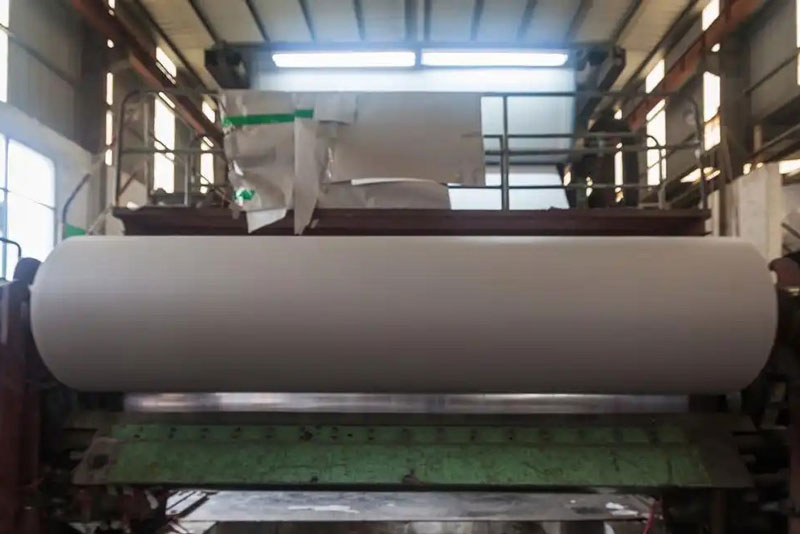
Plasma hardfacing applied to paper machinery components to enhance wear resistance
Stage 1: Pre-Hardfacing Preparation
Successful remanufacturing begins long before welding starts.
1. Repair Assessment and Process Planning
Engineers first evaluate:
- Wear mechanisms
- Operating conditions
- Base material composition
- Required service life
- Repair economics
Based on this analysis, FNS develops a customized restoration plan and selects the most suitable cladding technology.
2. Surface Preparation
The damaged area must be thoroughly cleaned before hardfacing.
Typical preparation includes:
- Removing oil and grease
- Eliminating rust and scale
- Stripping paint and coatings
- Grinding out fatigue layers
- Removing surface cracks
Proper preparation ensures strong metallurgical bonding between the deposited alloy and the substrate.
3. Material Selection
Choosing the right alloy is critical for a successful hardfacing remanufacturing process.
Common materials include:
- Nickel-based alloys
- Cobalt-based alloys
- Iron-based wear-resistant alloys
- Tungsten carbide reinforced alloys
- Stainless steel overlays
The selection depends on the required:
- Wear resistance
- Corrosion resistance
- Heat resistance
- Impact resistance
4. Consumable Conditioning
Before welding, electrodes, powders, and fluxes often require drying and temperature control.
Typical conditions include:
- Drying temperature: 150°C–400°C
- Drying time: 1–2 hours
- Storage temperature: approximately 100°C
This helps prevent moisture-related defects such as porosity and cracking.
Stage 2: Hardfacing Restoration and Rebuilding
The second stage is the core of the hardfacing remanufacturing process.
The goal is to restore component dimensions while improving performance beyond the original design.
Plasma Cladding
Plasma cladding offers:
- Low dilution rates
- High deposition quality
- Strong metallurgical bonding
- Excellent wear resistance
It is widely used for:
- Screw repair
- Valve components
- Hydraulic cylinders
- Mining tools
Laser Cladding
Laser cladding provides:
- Minimal heat input
- Precise material control
- Fine microstructure
- Low distortion
Ideal applications include:
- Bearing housings
- Turbine components
- Hydraulic support columns
- Precision machinery parts
Conventional Hardfacing Welding
For large-scale industrial components, traditional hardfacing methods remain effective.
Common applications include:
- Roll journals
- Crusher hammers
- Conveyor troughs
- Excavator components
Stress Relief During Restoration
Large components may require:
- Intermediate heating
- Furnace heat treatment
- Controlled cooling cycles
- Periodic machining
These procedures reduce residual stress and minimize the risk of:
- Cracks
- Porosity
- Inclusions
- Distortion
Stage 3: Post-Hardfacing Treatment
Post-processing is equally important in the hardfacing remanufacturing process.
Heat Treatment
Heat treatment may include:
- Tempering
- Surface hardening
- Carburizing
- Nitriding
Benefits:
✔ Stress relief
✔ Hardness improvement
✔ Microstructure optimization
✔ Enhanced durability
Non-Destructive Testing (NDT)
Every critical component should undergo inspection.
Common NDT methods include:
- PT (Liquid Penetrant Testing)
- MT (Magnetic Particle Testing)
- UT (Ultrasonic Testing)
- Visual Inspection
These tests verify the absence of:
- Cracks
- Porosity
- Lack of fusion
- Surface defects
Final Machining
The final step restores dimensional accuracy.
Processes may include:
- Turning
- Milling
- Grinding
- Boring
- Surface finishing
Precision machining ensures the remanufactured component meets original equipment specifications.
FNS Project Example
Large Mining Conveyor Component Restoration
A mining customer experienced severe wear on scraper conveyor trough sections operating under abrasive coal transport conditions.
Instead of replacing the components, FNS implemented a complete hardfacing remanufacturing process using plasma alloy cladding technology.
Results
- Wear resistance significantly improved
- Service life increased by more than 2 times
- Maintenance intervals extended
- Replacement costs substantially reduced
- Production downtime minimized
The project demonstrated how advanced remanufacturing technology can deliver both economic and operational benefits.
Benefits of Hardfacing Remanufacturing
Lower Operating Costs
Repairing components is often far less expensive than manufacturing new parts.
Extended Equipment Life
Wear-resistant overlays can significantly increase service life.
Improved Component Performance
Modern alloy systems can outperform original materials.
Sustainability
Remanufacturing reduces:
- Material waste
- Energy consumption
- Carbon emissions
Industries Using Hardfacing Remanufacturing
The hardfacing remanufacturing process is widely used in:
- Mining
- Oil and gas
- Power generation
- Steel manufacturing
- Cement production
- Chemical processing
- Pipeline engineering
- Heavy machinery manufacturing
Why Choose FNS Pipeline Technology Co., Ltd.?
FNS provides complete remanufacturing solutions including:
- Plasma cladding technology
- Laser cladding systems
- Internal bore cladding
- Wear-resistant alloy powders
- Automated hardfacing equipment
- Customized restoration engineering
Our team helps customers maximize equipment reliability while minimizing lifecycle costs.
Related Articles
- Laser Cladding vs Plasma Cladding: Which Is Better?
- Best Hardfacing Materials for Mining Equipment
- Internal Bore Cladding for Industrial Components
Frequently Asked Questions
What is the hardfacing remanufacturing process?
It is a repair technology that restores worn components by depositing wear-resistant alloys onto damaged surfaces.
Which industries benefit most from hardfacing remanufacturing?
Mining, oil & gas, power generation, steel production, cement manufacturing, and heavy equipment industries.
What is the difference between hardfacing and replacing a component?
Hardfacing restores and strengthens the existing component, while replacement requires purchasing a completely new part.
How long can hardfacing extend service life?
Depending on the application, service life can increase by two to five times or more.
What inspection methods are used after hardfacing?
PT, MT, UT, and visual inspection are commonly used to verify coating integrity and quality.
Can hardfacing improve the original component performance?
Yes. Modern alloy overlays often provide higher wear resistance, corrosion resistance, and heat resistance than the original material.
Which hardfacing technology is best?
The choice depends on component geometry, service conditions, and performance requirements. Plasma cladding and laser cladding are among the most advanced options available today.


