



Classification and Applications of Cemented Carbide
Cemented carbide is widely recognized for its exceptional hardness, wear resistance, and performance under demanding operating conditions. At FNS Pipeline Technology Co., Ltd., we work with various types of cemented carbide materials to support cutting tools, mining tools, and precision wear-resistant components. Understanding the cemented carbide classification system helps customers select materials that match their application requirements.
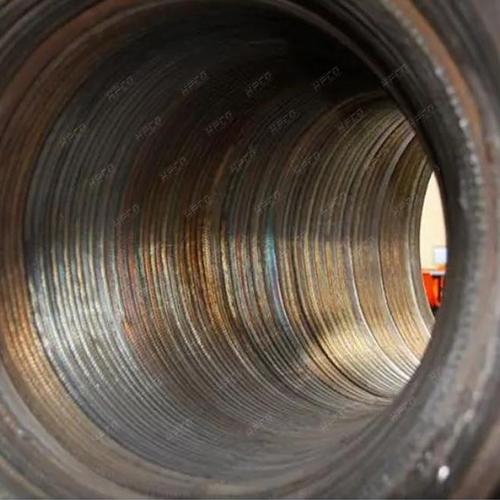
Chromium carbide weld overlay on mining slurry pipe
1. Classification of Cemented Carbide
Cemented carbide is commonly divided according to its composition, microstructure, and application field. The most widely accepted framework includes chemical-based categories and ISO carbide grades.
1.1 Classification by Composition and Structure
● WC–Co Cemented Carbide (YG Grades)
This type consists of tungsten carbide (WC) combined with a cobalt binder.
- Excellent toughness
- Suitable for machining cast iron, non-ferrous metals, composites, and general wear-resistant parts
WC-Co remains one of the most widely used types of cemented carbide due to its balance of strength and durability.
● WC–TiC–Co Cemented Carbide (YT Grades)
Adding titanium carbide (TiC) increases hardness and hot strength while reducing toughness.
- Designed mainly for cutting steel
- Offers better resistance against crater wear
This grade is often selected for high-temperature metal cutting applications.
● WC–TiC–TaC(NbC)–Co Cemented Carbide (YW Grades)
This group contains tantalum carbide (TaC) or niobium carbide (NbC) in addition to WC and TiC.
- Balanced hardness, toughness, and stability
- Suitable for machining steel, cast iron, and non-ferrous metals
- Known as “universal carbide” due to its broad applicability
These grades are frequently used where versatility is required.
1.2 Classification by ISO Application Category
The ISO standard categorizes carbide materials based on machining characteristics and chip formation.
● ISO P Class (Blue)
- Used for machining long-chip materials such as steel
- Corresponds roughly to YT and YW grades
● ISO M Class (Yellow)
- Designed for general-purpose machining
- Can cut steel, cast iron, and stainless steel
- Equivalent to YW universal carbide
● ISO K Class (Red)
- Optimized for short-chip materials such as cast iron, non-ferrous metals, and non-metallic materials
- Comparable to YG grades
These ISO carbide grades allow manufacturers to choose the ideal material for different cutting conditions.
2. Applications of Cemented Carbide
Thanks to its exceptional hardness and resistance to abrasion, cemented carbide is widely used across industrial sectors. Below are the primary cemented carbide applications supported by FNS Pipeline Technology.
● Cutting Tools
This is the largest application area. Cemented carbide forms the backbone of modern machining tools such as:
- CNC inserts
- End mills
- Drills
- Turning tools
These tools enable high-speed, high-precision metal cutting across manufacturing industries.
● Mining and Drilling Tools
Mining conditions require materials with superior impact toughness and wear resistance. Cemented carbide is used in:
- Rock drilling bits
- Coal-cutting picks
- Tunnel boring tools
These components ensure stable performance in harsh geological environments.
● Wear-Resistant Components
Due to its ability to withstand abrasion and erosion, cemented carbide is widely used in:
- Dies and molds
- Spray nozzles
- Mechanical seals
- Rolling components
- High-pressure pipeline equipment
FNS Pipeline Technology also supplies carbide parts tailored for demanding flow-control and pipeline systems.
● Consumer and Precision Products
Some everyday and precision items also rely on tungsten carbide:
- Cutting and polishing files
- Ball-point pen tips
- Precision instrument parts
These applications benefit from carbide’s dimensional stability and hardness.
Related Articles:
Coated Cemented Carbides: Enhancing Tool Performance with Advanced Surface Technology
The Key Properties and Applications of Cemented Carbide in Industrial and Pipeline Engineering
The Manufacturing Process of Cemented Carbide: Powder Metallurgy Explained


