


Best Alloy Materials Used in Industrial Hardfacing Applications: A Complete Guide for Wear Resistance and Equipment Life
Selecting the best alloy materials used in industrial hardfacing applications is one of the most important decisions in equipment remanufacturing and wear protection. Whether repairing mining tools, oil & gas valves, screw conveyors, crusher components, pipeline fittings, or steel mill equipment, the right hardfacing alloy directly determines service life, maintenance frequency, and overall operating costs.
At FNS Pipeline Technology Co., Ltd., we help customers select the optimum hardfacing alloy based on actual working conditions instead of simply choosing the hardest material. By combining advanced plasma transferred arc (PTA) cladding, laser cladding, automated welding systems, and application-specific alloy powders, FNS delivers durable metallurgical coatings that significantly extend component life while reducing total ownership costs.
Why Alloy Selection Matters in Industrial Hardfacing
Many equipment failures are caused not by inadequate structural strength but by gradual surface degradation.
Typical failure mechanisms include:
- Abrasive wear
- Sliding wear
- Metal-to-metal friction
- Impact wear
- Corrosion
- Erosion
- Cavitation
- High-temperature oxidation
- Thermal fatigue
Different wear mechanisms require different alloy systems. Selecting an unsuitable material often results in premature coating failure, cracking, excessive dilution, or unnecessary manufacturing costs.
The objective is not simply maximum hardness—it is achieving the best balance between:
- Wear resistance
- Toughness
- Corrosion resistance
- Heat resistance
- Crack resistance
- Machinability
- Cost efficiency
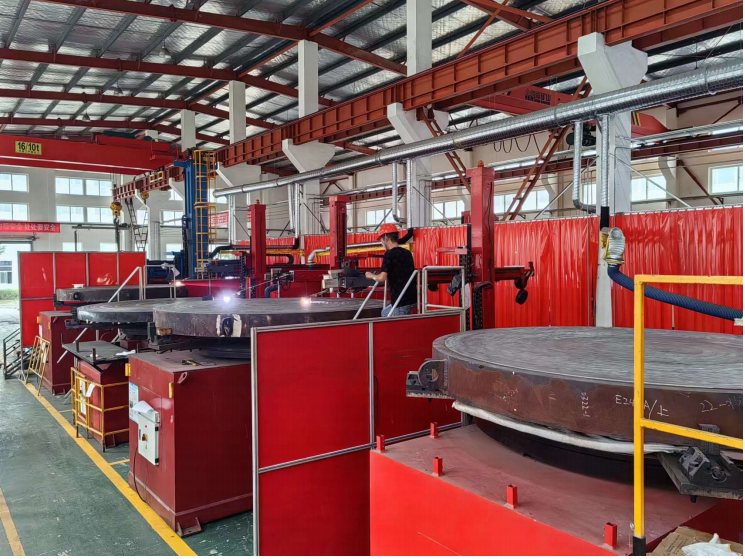
FNS cladding solutions for surface engineering
How to Select the Right Hardfacing Alloy
Professional engineers typically evaluate several factors before recommending a hardfacing solution.
Operating Environment
Questions include:
- Is the equipment exposed to sand or minerals?
- Is chemical corrosion present?
- Is seawater involved?
- Does the component operate above 600°C?
- Is there cavitation or slurry erosion?
These conditions determine the required alloy family.
Base Material Compatibility
The hardfacing alloy should match the thermal expansion characteristics of the substrate.
Typical substrates include:
- Carbon steel
- Low alloy steel
- Stainless steel
- Cast steel
- Tool steel
- Nickel alloys
Good compatibility minimizes residual stress and reduces cracking risks.
Required Surface Performance
Different applications prioritize different properties.
Examples include:
| Application | Priority |
| Mining cutters | Extreme abrasion resistance |
| Valves | Corrosion + sealing performance |
| Screw shafts | Wear + anti-galling |
| Turbine components | Heat resistance |
| Pipe internal cladding | Corrosion resistance |
| Rollers | Impact + wear |
Best Alloy Materials Used in Industrial Hardfacing Applications
1. Nickel-Based Alloys
Nickel alloys are among the most versatile hardfacing materials.
Typical grades include:
- Ni60
- Ni45
- Ni35
- Inconel 625
- Inconel 686
- Hastelloy series
Advantages
- Excellent corrosion resistance
- High-temperature stability
- Good crack resistance
- Excellent metallurgical bonding
- Suitable for plasma and laser cladding
Typical Applications
- Oil & gas valves
- Pipeline bore cladding
- Plastic extrusion screws
- Hydraulic cylinders
- Chemical equipment
- Pump components
2. Cobalt-Based Alloys (Stellite Series)
When high temperature combines with wear and corrosion, cobalt alloys remain an industry standard.
Common grades include:
- Stellite 6
- Stellite 12
- Stellite 21
Advantages
- Excellent hot hardness
- Outstanding galling resistance
- High oxidation resistance
- Superior cavitation resistance
Ideal Applications
- Valve seats
- Valve discs
- Steam turbine parts
- Pump sleeves
- Boiler components
- Nuclear equipment
3. Tungsten Carbide (WC) Reinforced Alloys
For severe abrasive environments, tungsten carbide remains one of the best choices.
WC particles can be incorporated into:
- Nickel-based matrices
- Cobalt-based matrices
- Iron-based matrices
Advantages
- Extremely high hardness
- Outstanding abrasion resistance
- Excellent particle erosion resistance
Applications
- TBM cutter rings
- Mining picks
- Drill tools
- Crusher hammers
- Agricultural machinery
- Wear plates
4. Iron-Based Hardfacing Alloys
Iron-based powders provide an economical solution for large components requiring moderate wear resistance.
Advantages include:
- Low material cost
- Good weldability
- High deposition efficiency
- Suitable for large-scale repair
Typical applications:
- Cement equipment
- Conveyor rollers
- Steel mill guides
- Agricultural machinery
- Bucket teeth
5. Chromium Carbide Alloys
Chromium-rich hardfacing alloys excel in abrasive wear combined with moderate corrosion.
Features include:
- High carbide content
- Good oxidation resistance
- Stable hardness
- Lower cost than WC systems
Applications:
- Fan impellers
- Cement screws
- Coal chutes
- Cyclones
- Ash handling systems
Alloy Comparison Table
| Alloy | Wear Resistance | Corrosion Resistance | Heat Resistance | Typical Industry |
| Nickel-based | ★★★★☆ | ★★★★★ | ★★★★☆ | Oil & Gas |
| Stellite | ★★★★☆ | ★★★★★ | ★★★★★ | Valves |
| WC Composite | ★★★★★ | ★★★☆☆ | ★★★★☆ | Mining |
| Iron-based | ★★★☆☆ | ★★☆☆☆ | ★★★☆☆ | Heavy Industry |
| Chromium Carbide | ★★★★☆ | ★★★☆☆ | ★★★★☆ | Cement |
How FNS Selects Alloy Materials
Rather than recommending a single alloy for every application, FNS engineers evaluate:
- Operating temperature
- Pressure
- Wear mechanism
- Corrosion media
- Base material
- Component geometry
- Service life targets
- Repair budget
Based on these factors, our engineering team develops customized hardfacing procedures using:
- PTA Plasma Cladding
- Laser Cladding
- Internal Bore Cladding
- Automated Hardfacing Systems
- Double Torch Internal Pipe Cladding
- Multi-axis Robotic Cladding
This engineering-based approach ensures each coating delivers the optimal balance of performance and cost.
FNS Project Example
Extending the Life of Plastic Extrusion Screws
A plastics manufacturer experienced frequent screw wear due to abrasive glass-fiber-filled polymers. Standard nitrided screws required replacement every eight months, resulting in costly downtime.
FNS evaluated the operating conditions and recommended a nickel-based alloy reinforced with tungsten carbide using an automated PTA cladding process. The optimized coating delivered:
- Significantly improved wear resistance
- Stable coating hardness
- Strong metallurgical bonding
- Minimal distortion after cladding
- Longer maintenance intervals
- Lower lifecycle costs
The solution extended screw service life by more than twice compared with the previous repair method, while reducing annual maintenance expenses and improving production uptime.
Why More Industries Choose Hardfacing Instead of Replacement
Replacing expensive industrial components is often unnecessary.
Modern hardfacing technology allows companies to:
- Restore original dimensions
- Improve wear resistance
- Upgrade corrosion performance
- Reduce material waste
- Lower spare-part inventory
- Support sustainable remanufacturing
For many components, remanufacturing costs only a fraction of purchasing new equipment while delivering equal or better surface performance.
Related Articles
To learn more about industrial hardfacing and remanufacturing, continue reading:
- Hardfacing Remanufacturing Process: Complete Guide from Surface Preparation to Final Machining
- Plasma Cladding Process vs Traditional Hardfacing: Which Is Better?
- How Hardfacing Remanufacturing Reduces Equipment Replacement Costs
- Laser Cladding vs Plasma Cladding: Choosing the Right Surface Engineering Solution
Frequently Asked Questions
Which alloy provides the highest wear resistance?
For severe abrasive wear, tungsten carbide reinforced alloys generally offer the highest hardness and wear resistance, making them ideal for mining tools, crusher components, and TBM cutters.
Is harder always better for hardfacing?
No. Excessive hardness can reduce toughness and increase the risk of cracking under impact loads. The optimal alloy depends on the specific wear mechanism and service conditions.
When should nickel-based alloys be selected?
Nickel-based alloys are recommended for environments involving corrosion, elevated temperatures, and combined wear, such as chemical processing, oil and gas, valves, and plastic processing equipment.
Why are Stellite alloys widely used on valves?
Stellite alloys provide excellent resistance to galling, cavitation, corrosion, and high temperatures while maintaining reliable sealing performance, making them a preferred choice for valve seats and sealing surfaces.
Can hardfacing be applied to worn components instead of replacing them?
Yes. Most industrial components with surface wear can be restored through hardfacing, provided the substrate remains structurally sound. This approach significantly reduces replacement costs and extends equipment service life.
What hardfacing technologies does FNS provide?
FNS offers a comprehensive range of surface engineering solutions, including PTA plasma cladding, laser cladding, internal bore cladding, robotic hardfacing, pipe end CRA cladding, and customized alloy development for industrial wear and corrosion protection.


